
How to Choose the Best Car Battery to Buy in 2026?
In 2026, choosing a car battery means matching the battery to your vehicle, driving habits, and local conditions. The best option is not always the newest or most expensive one. Check your owner’s manual for the required group size, terminal layout, and recommended battery type before comparing prices. A battery that almost fits can still create installation problems.
Cold mornings make cold-cranking amps (CCA) worth checking, while frequent short trips may place different demands on a battery. Some vehicles with start-stop systems require an AGM or another specified battery type; verify the requirement rather than guessing. Also compare warranty terms, reserve capacity, and the date or freshness of the battery. Details matter. A long warranty is useful, but it does not guarantee the battery will suit your car.
This guide will help you make a careful Car Battery Purchase by weighing compatibility, performance, cost, and maintenance needs. It will also explain when professional testing or installation may be sensible, especially for vehicles with battery-management systems. Your climate, budget, and daily route all count. Even a well-researched choice can involve trade-offs, and no single battery is best for every driver. Check the specifications twice.
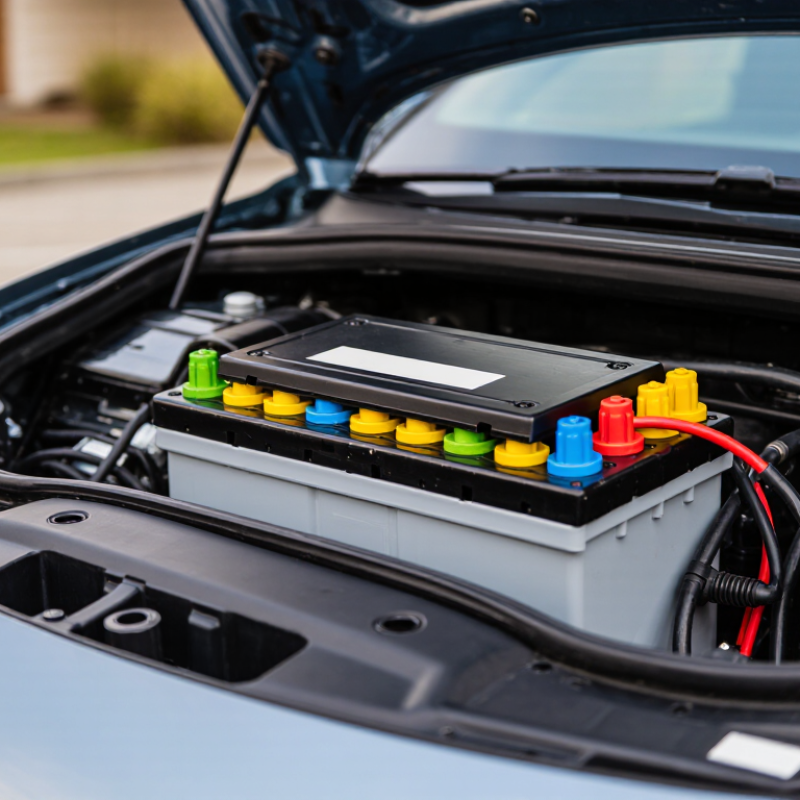
Identify Your Vehicle’s Battery Requirements
Before buying a replacement, check the owner’s manual and the label on the battery already installed. Record its group size, terminal positions, voltage, and required cold-cranking amps (CCA). Fit matters. A battery can have strong ratings and still be wrong if its case does not sit securely or its cables cannot reach the terminals.
CCA measures starting ability in cold conditions; reserve capacity describes how long a battery can support electrical loads if charging stops. SAE J537, an automotive storage-battery test standard, includes tests for both measures. They are not interchangeable. Match or exceed the vehicle maker’s stated requirements, rather than choosing the biggest number on the shelf. For vehicles with stop-start systems, confirm the specified battery type, such as AGM or EFB. Do not assume a conventional flooded battery is an acceptable substitute.
Check the age of the current battery, too. AAA’s battery guidance gives a typical service life of about three to five years, while heat and driving conditions can shorten it. A slow crank on a cold morning is useful evidence, but it is not a diagnosis. I used to treat the old battery label as the whole answer; that missed vehicle-specific requirements. Have the charging system tested if the battery repeatedly loses charge.
Compare Battery Types and Technologies
When comparing car batteries, start with the technology your vehicle requires. Conventional flooded lead-acid batteries are widely used and often cost less. They suit many older cars with modest electrical loads. Their liquid electrolyte can lose water over time, so some models need periodic checks. Maintenance-free versions are common, but “maintenance-free” does not mean immune to age or heat.
Enhanced flooded batteries, or EFBs, are built for frequent engine starts and basic stop-start systems. Absorbent glass mat batteries (AGM) hold electrolyte in a fibreglass mat. They typically handle repeated cycling and higher electrical demand better than conventional designs. That can matter when a car runs heated seats, screens, and stop-start functions in winter traffic. AGM batteries usually cost more. Not a small difference. Still, fitting one where the vehicle specifies EFB or AGM may not be a suitable upgrade; check the manual and charging-system requirements.
Lithium starter batteries are lighter, but compatibility deserves careful scrutiny. Charging behaviour, cold-weather performance, and battery-management electronics vary by vehicle and battery design. Compare the required group size, terminal layout, cold-cranking amps, and reserve capacity—not just the chemistry or price. A battery can look right on a shop shelf and still have the wrong case dimensions. I might be tempted by a higher specification, but more capacity is not automatically better if the charging system or vehicle settings are not designed for it.
Check Battery Size, Terminals, and Performance Ratings
Choosing a car battery starts with fit, not price. Check the owner’s manual or the label on your current battery for its group size. Then measure the tray and check the hold-down; a battery that shifts over bumps can damage its case or cables. Measure twice. Terminal position matters, too. Confirm that positive and negative posts match the cable layout, and that the cables reach without stretching or crossing.
Next, compare performance ratings. Cold-cranking amps (CCA) indicate starting power in cold conditions, while reserve capacity estimates how long the battery can support essential electrical loads if charging stops. Use the vehicle maker’s recommended ratings as your baseline, especially if you drive through freezing winters or make frequent short trips. Bigger numbers are not automatically better if the battery does not fit or suit the charging system. Cold starts matter.
Check the required battery type as well. Some vehicles with start-stop systems need a specific design, such as an AGM or EFB battery; fitting a different type may shorten battery life or affect system operation. Look for a clear manufacturing date, since batteries lose some charge while stored. I once focused too much on the CCA figure and overlooked terminal placement, which made an otherwise suitable battery awkward to install. That was a useful reminder: verify the physical details before buying, and ask a qualified technician when the vehicle’s specification is unclear.
Consider Climate, Warranty, and Total Cost
When temperatures regularly fall below freezing, check the battery’s cold-cranking rating against your vehicle manual. A higher number is not automatically better if the battery does not fit or meet the vehicle’s requirements. Heat matters too. Long, hot summers can shorten battery life, especially when a car sits outdoors and makes frequent short trips. Consider where you park and how you actually drive, not just the climate average. Don’t guess.
Warranty terms deserve a close read. Compare the free-replacement period, any prorated coverage, and what proof is required for a claim. Keep the receipt and installation record; they can save time later. A long warranty may look reassuring, but it does not make an unsuitable battery a good choice. I still find the fine print easy to overlook.
Compare the full cost, not only the shelf price. Ask whether installation, testing, or disposal of the old battery costs extra, and check for a refundable core charge. If you drive rarely, include the possible cost of charging or maintenance in your decision. A basic battery may be enough for mild conditions and ordinary use; severe cold or heavy accessory use may call for different specifications. The cheapest option can become expensive if it struggles through winter, though paying more is no guarantee of longer life.
How to read this chart: Typical U.S. retail estimates are broad ranges, shown here as midpoints: flooded lead-acid $100–$200 with a 24–36 month warranty; EFB $150–$250 with a 24–36 month warranty; and AGM $200–$350 with a 24–48 month warranty. Actual prices and coverage vary by vehicle, battery size, and retailer. Warranty length is not a promise of battery lifespan.
In hot climates, high under-hood temperatures can shorten battery life; in cold climates, check the vehicle’s required cold-cranking amps (CCA). Choose a battery type approved for your vehicle, compare the full warranty terms, and weigh purchase price against your climate and driving needs.
Select a Battery and Plan for Safe Installation
How to Choose the Best Car Battery to Buy in 2026?
Select a Battery and Plan for Safe Installation
Start with the vehicle owner’s manual, not a guess based on appearance. Check the required battery size, terminal layout, and chemistry; some vehicles need a specific type. Compare the recommended cold-cranking amps and reserve capacity, too. More power is not automatically a better fit. A battery may sit on the shelf for months, so check its date code and ask how it has been stored. Fit matters. If the manual is unclear, a qualified technician can confirm compatibility before you buy.
Plan the installation before lifting the battery. Park on a level surface, switch off the engine, remove jewelry, and wear eye protection and gloves. Work in a ventilated area. Take a photo of the cable layout, then disconnect the negative terminal first and the positive terminal second. Keep tools from bridging the terminals. Set the replacement battery securely, connect positive first, then negative, and tighten the clamps without forcing them. Keep it steady. Some newer vehicles need battery-monitoring settings reset or a replacement registered; check the manual or ask a technician. If the case is cracked, leaking, unusually hot, or too heavy to handle safely, stop and get professional help. I still find terminal order easy to rush, which is exactly why a written checklist helps.
Related Posts
-
Top 10 Car Batteries to Buy for Global Buyers?
-
2026 Top Car Battery Types for Global Buyers
-
Top 10 Car Battery Manufacturers from China at the 137th Canton Fair
-
Car Battery Store Insights from the 2025 China 138th Canton Fair Industry Data Analysis
-
China Top 10 Car Battery Suppliers and Cost Guide?
-

2025 Car Battery Innovations: A Comprehensive Checklist for Global Buyers