How Much Does a Car Battery Cost?
A dead battery can turn an ordinary morning into a tow-truck call. Yet Car Battery Cost is not one fixed number. For many conventional 12-volt replacements in the United States, a rough planning range is $100–$300, before unusual fitment needs or extra services. Treat that as a guide, not a guaranteed quote. The price can change with battery chemistry, size, warranty, installation, and vehicle electronics.
AAA’s battery guidance puts typical service life at about three to five years. That makes the purchase more than a one-day expense: a battery’s price, warranty, and expected lifespan all matter. A compact sedan with a basic flooded battery may cost less than a vehicle requiring an AGM battery. Some newer cars also need battery registration after installation. Small detail. It can affect the final bill.
There is no single government-set battery price. The U.S. Bureau of Labor Statistics tracks motor-vehicle maintenance and repair costs through its Consumer Price Index, but that broad measure does not provide a universal battery-replacement quote. So compare itemized estimates from repair shops and parts suppliers. Ask whether labor, testing, disposal, and warranty are included. One awkward caveat: online price ranges can look precise while leaving out the exact vehicle and local labor rate. The most useful answer comes from matching the battery specification to your car, then comparing complete, written quotes.
Typical U.S. Car Battery Prices: About $100–$300
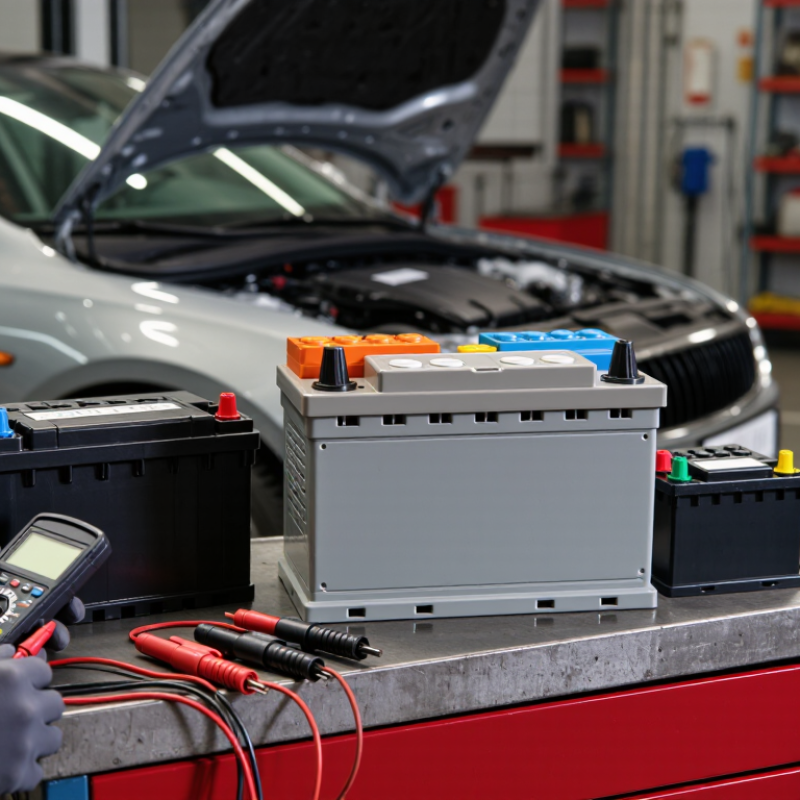
A typical U.S. car battery costs about $100–$300, with the final price shaped by battery type, vehicle, and installation. A basic flooded lead-acid battery often sits near the lower end; an absorbed glass mat battery, common in vehicles with heavier electrical demands, can cost more. Consumer Reports’ battery-buying guidance highlights matching battery specifications to the vehicle, not just choosing the lowest shelf price. Check the owner’s manual for the required size and performance rating. Small detail, big difference.
The battery itself is only part of the bill. Installation, testing, and disposal fees may add to the checkout price, and some vehicles need extra labor because the battery is difficult to reach. AAA guidance puts many car batteries’ service life at roughly three to five years, though heat, cold, and frequent short trips can shorten it. A slow engine crank on a chilly morning is a useful warning, but testing is more reliable than guessing. Ask for an itemized estimate that separates the battery, labor, and fees. Prices vary by location, and online ranges can miss that.
Lead-Acid vs. AGM Batteries: How Battery Type Affects Cost
Lead-acid batteries usually cost about $100 to $200, while AGM batteries often run $180 to $350. These are approximate U.S. battery-only prices; size, capacity, and local availability can change them. That gap adds up. A conventional flooded lead-acid battery is often the lower-cost choice for vehicles designed to use one. AGM batteries cost more because their sealed construction handles vibration and repeated charging demands well.
The extra expense is not automatically worthwhile. AGM can suit vehicles with start-stop systems or heavy electrical loads, but only when the vehicle is designed for it. Check the owner’s manual or existing battery label before buying. Installing the wrong type may cause charging problems. Not always obvious. Some vehicles also need battery registration after replacement, adding labor to the bill.
Compare the total installed price, not just the shelf tag. Labor, disposal, and access can raise the final cost, especially when the battery sits beneath a seat or behind trim. A cheaper lead-acid option may be sensible for a compatible vehicle with modest electrical demands. Still, a low upfront price can be misleading if the battery is poorly matched. Check the terminal layout and battery group size, too; a small mismatch can turn a quick swap into an inconvenient return.
Installation, Testing, and Core Fees: What Adds to the Bill
A car battery’s shelf price is only part of the total. The final bill may include installation, electrical testing, and a refundable core fee for the old battery. A straightforward swap often takes little time, but access can affect labor costs. On some cars, the battery sits beneath a seat or behind a wheel well. That adds up.
Ask whether testing is included in the quoted price. A basic battery test can check its charge and condition, while broader diagnostics may examine the alternator and charging system. If the engine still struggles after a new battery, that extra check may help identify another fault. Not always. Some shops charge separately for diagnostic work, so clarify the price before authorizing it.
The core fee encourages the return of the old battery for recycling. You may get it back as a refund or credit, depending on the shop’s policy. Before approving work, ask how and when that refund is issued. Request an itemized quote showing parts, labor, testing, and any disposal or core charges. I would not assume two “installed” prices include the same services. A quote can change if technicians find corrosion, damaged terminals, or a battery hold-down that needs attention. This is easy to overlook.
How Much Does a Car Battery Cost?
Typical U.S. cost ranges by bill component (USD)
Battery prices vary by vehicle and battery type. Installation and testing fees depend on the service provider; testing may be included. A core deposit is usually refundable when the old battery is returned, so it may increase the amount due initially but not the final cost.
Vehicle Fit and Cold-Cranking Amps: Key Price Factors
How Much Does a Car Battery Cost?
Vehicle Fit and Cold-Cranking Amps: Key Price Factors
A car battery commonly costs about $100–$300 in the United States before installation, but fit can shift the bill. The Battery Council International (BCI) group-size guide classifies batteries by case dimensions and terminal layout. A battery that looks close may still have the wrong post position or hold-down points. Some vehicles also need battery registration after replacement, adding labor. Check the owner’s manual and the label on the old battery before comparing prices.
Cold-cranking amps (CCA) matter most in freezing weather. SAE J537 tests CCA at 0°F (-18°C): a 12-volt lead-acid battery must sustain the specified current for 30 seconds while staying at or above 7.2 volts. Higher CCA can cost more, but buying the biggest number is not always useful. Match the vehicle maker’s recommendation; a larger rating cannot fix the wrong size or terminal layout. That part is easy to overlook.
Tips: Ask for the exact BCI group size and minimum CCA, then compare the quoted battery price with installation, testing, and any required registration. Have the charging system checked if the old battery failed early. A weak alternator can drain a new battery, too. Estimates vary by vehicle and location, so get the total in writing.
| How Much Does a Car Battery Cost? — Vehicle Fit and Cold-Cranking Amps: Key Price Factors |
| Typical U.S. retail estimates in USD. Actual prices vary by vehicle, battery specifications, location, and installation requirements. |
| Vehicle Fit |
Common Battery Type |
Typical CCA Range |
Battery-Only Price |
Estimated Installed Total |
How Fit and CCA Affect Cost |
| Compact car, conventional start-stop system absent |
Standard flooded lead-acid |
400–600 CCA |
$100–$180 |
$120–$240 |
Smaller batteries and moderate CCA requirements generally fall toward the lower end of the price range. |
| Midsize sedan or crossover |
Flooded lead-acid or enhanced flooded battery (EFB) |
500–700 CCA |
$130–$260 |
$150–$320 |
A higher CCA rating or an EFB specification can raise the price. Vehicles with start-stop systems may require an EFB or another specified battery type. |
| Large SUV, van, or light-duty pickup |
High-capacity flooded lead-acid or AGM |
650–850 CCA |
$160–$350 |
$190–$420 |
Larger case sizes and higher starting-current requirements typically cost more than compact-car fitments. |
| Vehicle specified for start-stop operation or greater electrical demand |
Absorbent glass mat (AGM) |
600–900 CCA |
$200–$400 |
$230–$480 |
AGM batteries generally cost more than standard flooded batteries. The vehicle’s required battery chemistry and size should be matched. |
| Cold-weather use, where the vehicle allows a higher-CCA option |
Vehicle-specified flooded, EFB, or AGM battery |
700–950 CCA |
$180–$400 |
$210–$480 |
Higher CCA can increase cost, but the correct battery group size, terminal layout, and chemistry must still match the vehicle. |
| Price note: Installed totals are approximate and may include basic labor. Some vehicles require battery registration, memory preservation, or additional access work, which can add to the final bill. Always check the vehicle’s specifications before choosing a replacement. |
AAA’s 3–5-Year Battery Life: When to Budget for Replacement
A car battery often lasts three to five years, but that range is a planning guide, not a guarantee. Heat can speed up battery wear, while freezing weather makes a weak battery work harder. Frequent short trips may also leave it undercharged. After the third year, consider a battery test during routine service, especially before a cold season or a long trip. A slow engine crank is a warning, though it does not prove the battery is the only problem. Dim lights can have other causes, too. Details matter.
For a typical replacement, budget roughly $100 to $300, including installation; vehicles with specialized battery systems may cost more. Local labor rates and the required battery type can change the final bill, so check the vehicle manual and request an itemized estimate. A test can help you avoid replacing a battery that still has useful life. Still, waiting for a failure can mean an inconvenient no-start in a driveway or parking lot. I would treat year five as a prompt to plan, not a deadline. Expect some uncertainty.