How to Secure Battery Supply in 2026?
How to Secure Battery Supply in 2026? The question now reaches far beyond securing enough lithium. It concerns refining capacity, reliable shipping, ethical mining, recycling, and the resilience of every supplier tier. A battery may begin with a mineral deposit in Australia, move through chemical processing in China, and reach an assembly plant in Europe. One disruption can affect the entire chain.
Simon Moores, chief executive of Benchmark Mineral Intelligence, has described lithium as “the new oil.” His observation remains relevant, but it needs wider interpretation. Lithium alone cannot secure Battery Supply. Companies also need stable access to nickel, graphite, manganese, electrolytes, and manufacturing equipment. They must understand where materials originate and how suppliers operate.
A practical 2026 strategy should combine long-term contracts, regional partnerships, diversified sourcing, and verified recycling channels. Supplier audits should examine environmental records, labor practices, production quality, and financial stability. Real-time inventory data can expose shortages before factory lines stop. It cannot prevent every shock.
No forecast is perfect. Political decisions, extreme weather, or sudden demand can still break careful plans. That weakness deserves attention. Companies may overinvest in one region or trust untested suppliers too quickly. They may also treat recycling as a distant solution, although recovered materials could reduce pressure on primary mining.
Secure Battery Supply will require discipline rather than one dramatic purchase. Leaders should test alternative suppliers, build transparent relationships, and measure risk continuously. The strongest plans will remain flexible, evidence-based, and realistic about uncertainty.
Map 2026 Supply Risks: IEA Reports China Controls 80%+ of Refining
How to Secure Battery Supply in 2026?
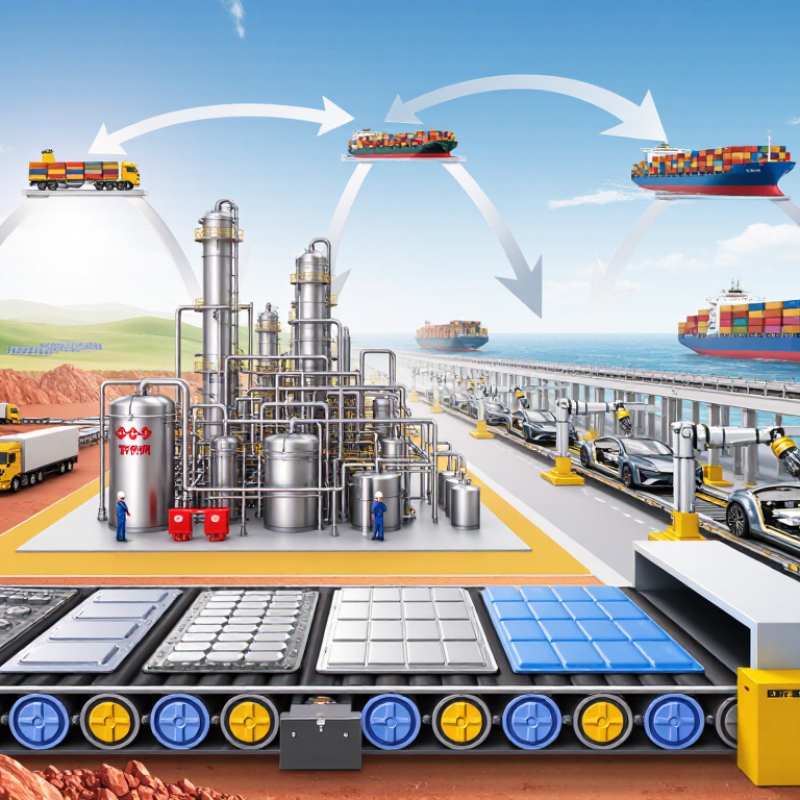
Battery supply planning now requires more than counting mined materials. The International Energy Agency reports that China controls over 80% of refining capacity for several critical battery minerals. This concentration creates exposure to export controls, power shortages, shipping delays, and sudden price changes. A mine may operate smoothly, yet a single refining bottleneck can stop production weeks later.
Procurement teams should map each material from mine to chemical conversion, cathode production, and cell assembly. Record the country, processing stage, transport route, and backup supplier. Do not treat a signed contract as guaranteed supply. My own planning mistake was tracking suppliers, but not the ports and processors behind them. That gap made a regional disruption look impossible until it happened. It was not impossible.
Tips: Build a risk dashboard with monthly updates. Hold practical safety stock for high-risk materials, not every material. Test alternate specifications with engineers before an emergency. Compare domestic, regional, and overseas refining options. Recycling can reduce future exposure, but its near-term volume may be smaller than expected. Use independent market data and supplier audits to challenge optimistic forecasts. Keep one uncomfortable question visible: what happens if the main refining route closes for ninety days?
Diversify Lithium and Cobalt Contracts Using USGS Reserve Data
How to Secure Battery Supply in 2026?
Lithium and cobalt contracts should begin with geological evidence, not optimistic forecasts. The USGS Mineral Commodity Summaries 2025 reports around 30 million metric tons of global lithium reserves. It also records approximately 240,000 tons of lithium mine production in 2024. These figures reveal scale, but not immediate availability. Permitting, processing capacity, transport, and political risk can still delay supply.
Cobalt requires even closer scrutiny. USGS data estimates global cobalt reserves near 11 million metric tons, with 2024 mine production around 230,000 tons. Buyers should avoid concentrating contracts in one producing region. A practical portfolio might combine long-term lithium agreements across South America, Australia, and Africa. Cobalt contracts could include multiple mining regions and recycled material streams. Small volumes matter.
The IEA’s Global Critical Minerals Outlook 2024 warns that refining remains highly concentrated. More than 80% of cobalt refining capacity is located in one country, while lithium processing is also dominated by a small number of markets. Reserve ownership therefore does not equal supply security. Procurement teams should compare reserves, annual production, refining location, logistics, and contract flexibility in one dashboard.
This model is imperfect. USGS reserves can change with prices and technology. A mine may look secure on paper, yet fail during a storm, strike, or processing outage. Contracts need backup suppliers, transparent origin data, volume adjustment clauses, and quarterly risk reviews. Reserve data is the starting map, not the finished route.
How to Secure Battery Supply in 2026?
Diversify lithium and cobalt contracts using USGS reserve data
The chart compares selected national reserves reported by the U.S. Geological Survey. Lithium is shown in million metric tons of lithium content and cobalt in thousand metric tons of cobalt content. A balanced 2026 contracting strategy should avoid excessive dependence on one country and combine supply agreements across several reserve holders. Values are rounded from the USGS Mineral Commodity Summaries 2024.
Expand Recycling Capacity as IEA Forecasts Battery Demand to Rise
How to Secure Battery Supply in 2026?
Battery demand is expected to rise sharply, according to IEA forecasts. Recycling capacity must grow with it. New mines alone cannot provide a stable answer. Recovered materials can reduce pressure on mineral supply and shorten transport routes.
A reliable recycling system needs regional collection points, safe storage, and clear testing procedures. Facilities should separate production scrap from used batteries. They should also track material quality from collection to refining. Hydrometallurgical recovery can return valuable metals with lower heat requirements, but it still needs careful wastewater management. From practical project reviews, small handling delays often become expensive bottlenecks. That lesson is easy to underestimate.
Tips: Map battery waste before building capacity. Use independent audits for recovery rates. Keep emergency storage plans current. Train workers with realistic fire-response drills. Do not assume every battery chemistry fits one process. Pilot projects can reveal problems earlier. Data quality matters. However, recycling will not solve every supply risk. Collection remains weak in many regions, and transport rules can slow movement. Companies may also overestimate future recovery volumes. Better forecasting, transparent reporting, and flexible facilities will be essential as demand changes.
Regionalize Cell Production Amid BNEF’s $115/kWh Pack-Price Benchmark
How to Secure Battery Supply in 2026?
Regionalize cell production around demand, not political slogans. BNEF’s $115/kWh pack-price benchmark offers a useful planning reference, but it is not a universal guarantee. Chemistry, factory utilization, labor costs, and local electricity prices can shift the final figure considerably. A battery pack leaving a plant in 2026 may still contain materials from several continents.
A practical regional strategy begins with cell capacity near vehicle and storage markets. A 10 GWh factory can reduce ocean freight, customs delays, and emergency inventory. It also allows engineers to adjust cells for local climates. For example, a hot region may need stronger thermal controls, while a cold market may require improved low-temperature performance. Regional plants should secure nearby processing for cathode materials, separator films, electrolyte, and aluminum components. One weak link can stop a complete line.
The economics remain difficult. Local production may cost more than importing cells during periods of oversupply. That criticism is valid. Yet a low purchase price cannot protect a manufacturer from port closures, sudden export limits, or a supplier’s quality failure. Companies should use multi-year contracts, audited reserves, and independent testing. They should also track yield losses by production batch, not only quarterly output. The $115/kWh benchmark is valuable, but treating it as a fixed target would be a planning mistake. Some regional factories may need subsidies, better recycling networks, or slower expansion to reach stable costs.
Stress-Test Inventory Plans Against 2026 Price and Export Shocks
How to Secure Battery Supply in 2026?
Battery procurement in 2026 will require more than securing annual volume. Teams must test inventory plans against sudden price increases and export disruptions. A practical model should examine lithium, nickel, graphite, cells, and finished packs separately. Each category faces different supply risks. Map every tier, including processing regions and shipping routes. Small gaps often hide upstream exposure.
Run at least three stress scenarios. One should model a 30% material price increase lasting six months. Another should assume a major export delay of eight weeks. A third can combine both shocks with weaker demand. Measure cash requirements, production losses, safety-stock coverage, and customer impact. Do not rely on average monthly consumption. A factory may consume twice its normal volume during a product launch.
Physical checks matter. Compare warehouse records with purchase orders, transit notices, and quality-release dates. Review whether stored cells meet the required age and temperature limits. Separate usable inventory from stock awaiting inspection. It is not available yet. Dual sourcing can reduce exposure, but it may increase testing costs and create inconsistent performance. A trial plan may also overestimate supplier flexibility. Recalculate it using confirmed capacity, not hopeful promises. Review assumptions every month, especially after policy changes, freight disruptions, or sharp commodity movements.