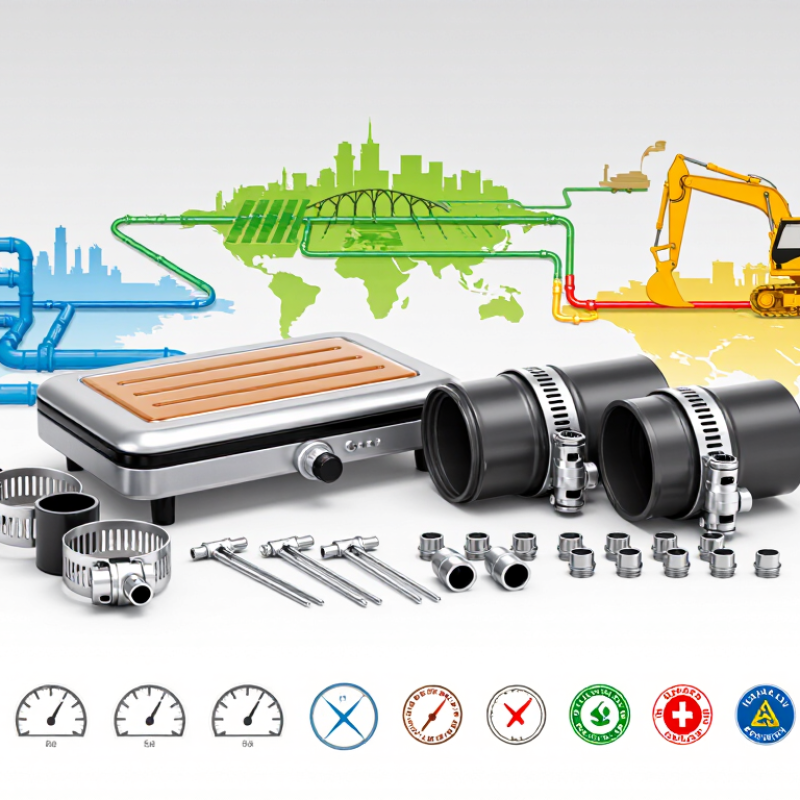
Why Butt Fusion Accessories Matter for Global Buyers?
Global infrastructure is moving toward durable, leak-resistant piping systems. The demand is visible in water networks, gas distribution, mining, agriculture, and industrial projects. Grand View Research’s Plastic Pipes Market report identifies infrastructure renewal and urban development as major growth drivers. These projects require more than quality polyethylene pipe. They also depend on reliable joining equipment and correctly selected components.
Butt Fusion Accessories include heating plates, clamps, alignment tools, facing units, inserts, and replacement parts. Each item affects joint accuracy. A poorly aligned pipe can create uneven bead formation. A contaminated heating surface can weaken the connection. Small errors may remain hidden until pressure testing or field operation. That is why global buyers should evaluate accessories as part of the complete fusion system, not as low-cost add-ons.
Industry guidance supports this approach. ASTM F2620 and ISO 21307 describe controlled butt fusion procedures, including heating, joining, and cooling requirements. The Plastics Pipe Institute also emphasizes equipment calibration, operator training, and documented fusion parameters. Meanwhile, reports from MarketsandMarkets and Fortune Business Insights continue to show strong long-term demand for polyethylene piping across water and utility applications. These trends create opportunity, but they also create pressure to buy quickly.
That can be a mistake.
A lower purchase price may hide poor temperature stability, weak clamping force, or unavailable spare parts. Global buyers must examine material compatibility, certification, service support, and delivery reliability. The uncomfortable point is simple: not every accessory marketed for fusion work performs equally in real conditions. Careful selection protects joint quality, project schedules, and long-term operating confidence.
What Butt Fusion Accessories Are and How They Support Pipe Joining
Butt fusion accessories are the working tools around a pipe fusion machine. They include facing tools, heating plates, clamps, reducer inserts, rollers, and hydraulic units. Each part supports a different stage of joining. The facer removes uneven pipe ends and creates matching surfaces. Clamps hold the pipes straight, while inserts secure smaller diameters. Rollers reduce drag during alignment and movement.
The heating plate softens both pipe ends at a controlled temperature. Clean, even contact matters here. Dust or a damaged coating can weaken the joint. A hydraulic unit then brings the softened ends together with steady pressure. Pressure should follow the approved procedure for the pipe material and diameter. Temperature indicators and independent checks improve process reliability. They also help operators record useful quality data.
In field work, small accessories often prevent large problems. A loose clamp can create angular misalignment. A worn facer may leave gaps that look minor but affect strength. It is easy to trust the machine too much. The operator still needs to inspect faces, clean surfaces, and watch the heating cycle. The checklist may never be perfect. That is a reason to review it, not ignore it. Proper storage also matters, because moisture, impact, and dirt can damage precision surfaces before the next joint.
Key Accessory Types Used in Butt Fusion Operations
Why Butt Fusion Accessories Matter for Global Buyers?
Key Accessory Types Used in Butt Fusion Operations
Butt fusion quality depends on more than the welding machine. Facing tools remove uneven pipe ends and create clean, parallel surfaces. Clamps and interchangeable inserts hold different pipe diameters securely. Heating plates then soften the faces at a controlled temperature. A pressure gauge is essential. It helps operators follow approved joining procedures instead of relying on hand pressure.
Support rollers reduce drag during alignment. This matters when handling long, heavy polyethylene pipes on uneven ground. Hydraulic units provide steady movement during heating, changeover, and fusion. Data loggers can record temperature, pressure, and cycle time. These records strengthen inspection and traceability, especially on international projects. Small details matter.
The need is substantial. WHO and UNICEF’s Joint Monitoring Programme reported that 2.2 billion people lacked safely managed drinking water in 2022. Meanwhile, the Global Infrastructure Hub estimated a $15 trillion infrastructure investment gap by 2040. Reliable pipe joining will remain important in expanding water networks. However, accessory lists are not perfect. Some buyers focus on machine output and overlook calibration, spare inserts, or weather protection. That can create delays beside a muddy trench. Buyers should check compatibility, pressure accuracy, heating uniformity, and service documentation. ISO 21307 provides recognized butt fusion procedure guidance, but field conditions still require practical judgment.
How Accessories Affect Joint Quality, Safety, and Efficiency
Why Butt Fusion Accessories Matter for Global Buyers?
How Accessories Affect Joint Quality, Safety, and Efficiency
Butt fusion accessories directly influence joint quality, safety, and working speed. A poorly aligned clamp can create uneven pressure across the pipe ends. That small error may produce a weak joint, even when the heating temperature looks correct. Accurate facing tools create flat, clean surfaces. Clean surfaces matter.
On active job sites, operators also depend on reliable heaters, pressure gauges, temperature controls, and alignment guides. A heater with unstable temperature can overheat one area while leaving another under-melted. Calibrated gauges help workers apply consistent pressure during heating, changeover, and cooling. Proper lifting handles reduce hand injuries when equipment is moved between trenches. These details are easy to overlook.
Accessory durability affects efficiency over months, not only during one installation. A worn scraper may remove too little oxidation. A damaged clamp may require repeated adjustments. Both problems waste time and invite poor decisions under pressure. Safety improves when guards, insulated grips, and secure locking parts remain functional. However, accessories are not magic solutions. Operators still need training, clean work areas, and inspection records. In field reviews, teams sometimes focus heavily on the fusion machine and ignore small tools. That is a mistake worth questioning. A complete accessory set should match pipe size, job conditions, maintenance capacity, and local operating practices. Even a useful tool can fail when stored carelessly or used outside its intended range.
Why Butt Fusion Accessories Matter for Global Buyers
Accessory selection directly supports joint quality, operator safety, and installation efficiency. The relative scores below are based on standard butt fusion work steps such as alignment, facing, heating, joining, cooling, and inspection, as described in ISO 21307 and related industry practice.
Higher scores indicate greater practical influence on the selected performance area. Actual results depend on pipe material, diameter, wall thickness, ambient conditions, equipment calibration, and operator training.
Factors Global Buyers Should Evaluate Before Purchasing
Global buyers often focus on the fusion machine and overlook its accessories. That is a costly shortcut. Before ordering, confirm pipe size, wall thickness, pressure class, and heating temperature range. An adapter that fits loosely can damage the joint or delay installation. Measure twice. Request dimensional drawings, tolerances, and connection details before approving a purchase. Do not rely on product photographs alone.
Material compatibility deserves careful attention. Accessories should match the pipe material and the jobsite temperature. Ask for material specifications, surface treatment details, and expected service life. Batch records can support traceability when quality questions arise. Independent testing reports are useful, but certification alone is not enough. Review who performed the test, which method was used, and whether the results apply to your working conditions. Some suppliers provide complete documents, while others offer only general claims. That difference matters.
Global purchasing adds practical risks. Evaluate packaging, corrosion protection, shipping conditions, and replacement availability. Moisture or rough handling can affect precision components before they reach the site. Lead time should include customs clearance and possible inspection delays. Clarify spare parts, warranty limits, and technical support in writing. A clear troubleshooting guide can save hours when equipment is used far from the supplier. Cost comparisons can mislead. A cheaper accessory may require more adjustments, extra labor, or earlier replacement. I have seen buyers ignore small tolerances and regret that decision later. Still, no checklist removes every uncertainty. Ask practical questions before payment.
Maintenance, Compatibility, and International Supply Considerations
Why Butt Fusion Accessories Matter for Global Buyers?
When purchasing butt fusion equipment across borders, buyers often focus on the heating plate and main machine. In field maintenance, small accessories often determine daily reliability. Scraper blades, clamps, facing tools, and temperature sensors need regular inspection. A worn blade can leave uneven pipe ends. That error may remain hidden until joint testing. Cleaning is simple. Consistency is not.
Compatibility requires more than matching dimensions. Check pipe diameter ranges, pressure ratings, power requirements, connection types, and material suitability. Accessories should fit the equipment’s operating method and maintenance schedule. A replacement sensor may look identical but produce inaccurate readings. Technical drawings, calibration records, and clear instructions reduce that risk. Ask for samples when specifications seem incomplete. That step may feel slow, but rework costs more.
International supply adds practical concerns. Confirm spare-part availability, packaging strength, and realistic delivery times before purchasing. Moisture can damage electrical parts during long storage. Sharp tools need protected packaging. Reliable suppliers should provide traceable documentation and responsive technical support. I have seen buyers order extra parts without checking local storage conditions. Some were unusable months later. That mistake deserves more attention. A careful maintenance log, with photos and inspection dates, helps teams identify recurring failures and improve future orders.
Why Butt Fusion Accessories Matter for Global Buyers? - Maintenance, Compatibility, and International Supply Considerations
| Accessory or Consideration | Primary Function | Important Technical Data | Maintenance and Inspection Guidance | Compatibility Check | International Supply Consideration |
|---|---|---|---|---|---|
| Heating Plate | Heats the pipe ends evenly before pressure joining. | Common operating temperatures for polyethylene butt fusion are approximately 200–220 °C, subject to the applicable procedure and material requirements. | Check surface cleanliness, temperature uniformity, non-stick coating condition, electrical cable integrity, and thermostat operation before use. | Confirm pipe material, required heating-face diameter, voltage, frequency, and controller type. | Voltage and plug standards vary by market. Request the correct electrical configuration and include suitable export documentation. |
| Facing Tool | Removes oxidation and creates parallel, square pipe ends for joint preparation. | Cutting capacity must cover the machine’s stated pipe outside-diameter range. Blades should produce continuous, clean shavings. | Inspect blades for wear or damage, remove shavings, verify facing-plate alignment, and keep moving parts lubricated where permitted. | Match the facing tool to the machine frame, carriage, pipe-size range, drive system, and mounting arrangement. | Replacement blades and drive components should be available for the expected service life and operating region. |
| Pipe Clamps and Inserts | Secure and align pipes during facing, heating, and fusion. | Clamps must support the specified pipe sizes and prevent movement without damaging the pipe surface. | Check threads, hinge points, clamp faces, inserts, and tightening mechanisms. Remove dirt that could affect alignment. | Verify outside-diameter range, insert dimensions, frame design, and compatibility with metric or inch-based pipe systems. | Confirm whether additional reducers or inserts are included. These smaller parts can be costly or slow to replace internationally. |
| Hydraulic Power Pack | Applies controlled clamping and fusion pressure through the machine carriage. | Required pressure depends on pipe size, wall thickness, material, drag resistance, and the approved fusion procedure. | Inspect hoses and fittings for leaks, check oil level and condition, clean filters as required, and verify pressure-gauge accuracy. | Check hydraulic port type, operating pressure, flow requirements, hose length, and control-valve configuration. | Use regionally suitable hydraulic fittings and specify spare seals, hoses, and filters to reduce downtime caused by customs delays. |
| Pressure Gauge | Displays hydraulic pressure used to control the fusion cycle. | A gauge should have a suitable measuring range and readable scale for the machine’s operating pressure. | Protect from impact and moisture. Compare readings with a calibrated reference at planned intervals and replace damaged gauges. | Confirm thread size, connection orientation, pressure range, and whether the gauge reading corresponds to the required fusion force. | Calibration certificates may be required for regulated projects. Specify measurement units such as bar, MPa, or psi. |
| Data Logger or Recorder | Records heating temperature, pressure, time, and other parameters for quality control. | Useful records may include pipe identification, operator details, ambient conditions, heating time, changeover time, and fusion pressure. | Check sensor accuracy, battery condition, memory capacity, date and time settings, and data-export functionality. | Confirm sensor connections, software language, file format, operating system, and compatibility with the fusion machine. | Consider local data-protection rules, software licensing, wireless restrictions, and availability of technical support in the destination country. |
| Alignment and Support Tools | Reduce pipe movement, bending, and misalignment during joint preparation. | Supports should be stable, adjustable, and suitable for the pipe diameter, weight, length, and installation environment. | Inspect rollers, frames, locking points, and adjustment mechanisms. Remove soil and debris after field use. | Check working height, pipe-size range, load capacity, folded dimensions, and compatibility with trench or workshop conditions. | Foldable designs can reduce shipping volume. Confirm package dimensions, gross weight, lifting points, and spare hardware requirements. |
| Cleaning Materials | Remove dirt, moisture, and surface contamination before fusion. | Use clean, lint-free materials and a cleaning method approved for the pipe material and fusion procedure. | Keep wipes and approved cleaning agents sealed, dry, and free from oil or abrasive contamination. | Ensure the cleaning product does not leave residue or chemically attack the pipe surface or heating plate. | Liquid cleaners may be subject to transport and customs restrictions. Safety data sheets and correct labeling may be required. |
| Calibration and Documentation | Supports repeatable operation, traceability, and project acceptance. | Relevant records can include machine specifications, pressure-gauge calibration, temperature verification, operating procedures, and inspection logs. | Maintain a documented inspection schedule and remove equipment from service when critical measurements are unreliable. | Check conformity with the project specification, applicable ISO or national standards, and the pipe manufacturer’s joining procedure. | Request manuals, certificates, packing lists, certificates of origin, and translated safety information when required by the destination market. |
| Spare Parts Package | Minimizes downtime from wear, damage, or routine replacement. | Typical items include heating-plate coatings, facing blades, seals, hydraulic hoses, filters, fuses, fasteners, and electrical connectors. | Store parts in clean, dry packaging and identify components by part number, dimensions, and equipment position. | Verify exact machine model, production version, connector type, thread standard, seal material, and dimensional tolerances. | Plan stock according to project duration and local lead time. Consolidated shipments can reduce freight cost but may increase initial inventory. |
| Export Packaging | Protect precision components during international transport and storage. | Packaging should control movement, protect against moisture, and separate coated or machined surfaces from abrasive contact. | Inspect crates and protective materials after delivery. Check for impact, corrosion, missing parts, or water ingress before commissioning. | Confirm lifting points, crate dimensions, total weight, and whether the package suits road, sea, or air freight. | Wood packaging may need treatment and marking under destination-country rules. Accurate customs descriptions and harmonized codes help prevent delays. |
| Service and Training Support | Helps operators use accessories correctly and maintain joint quality. | Training should cover preparation, alignment, heating, pressure control, cooling, inspection, and safe equipment handling. | Keep service records, operator checklists, troubleshooting procedures, and maintenance intervals accessible at the worksite. | Confirm language options, remote-support methods, local service capability, and availability of technical drawings. | Time-zone coverage, response time, spare-parts logistics, and translated manuals can significantly affect total ownership cost. |