
What Is a Refrigeration Condensing Unit?
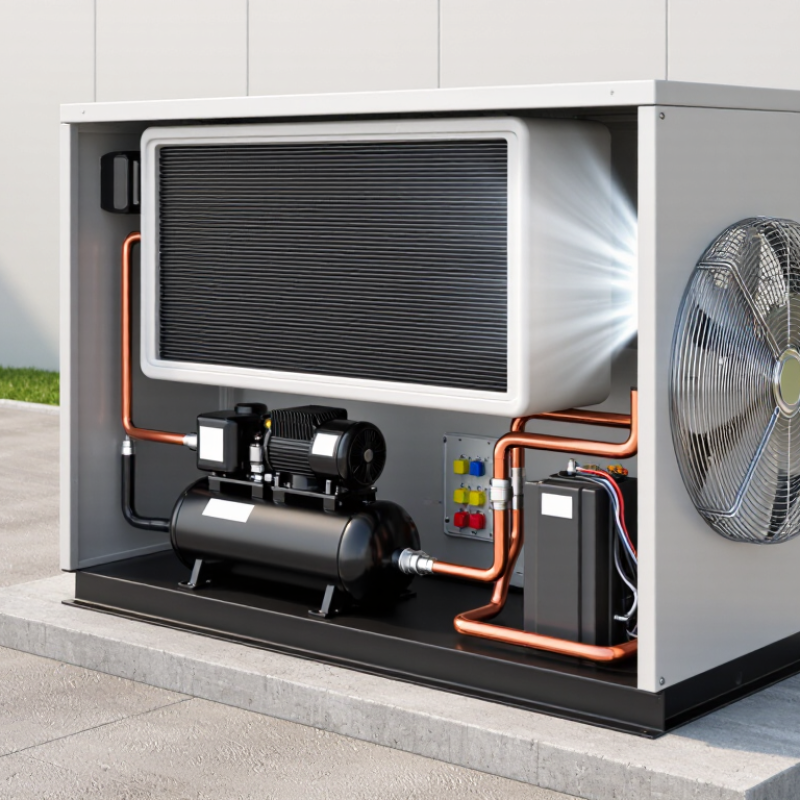
A Refrigeration Condensing Unit is the equipment that releases heat from a refrigeration system. It usually combines a compressor, condenser, fan, receiver, and control components. Working together, these parts transform hot, high-pressure refrigerant vapor into a cooler liquid. This process supports stable temperatures inside cold rooms, display cases, freezers, and other cooling equipment.
In practical service work, the condensing unit is often found outdoors or in a dedicated plant area. You may hear the compressor start, then feel warm air leaving the condenser coil. That heat is removed from the refrigerated space. However, the unit does not work alone. The evaporator, expansion device, piping, electrical controls, and refrigerant charge must also operate correctly. A clean coil can improve airflow, while a blocked coil may increase pressure and energy use.
The design can look simple. It is not always simple. Correct capacity, ambient temperature, refrigerant type, oil compatibility, and operating pressure require careful evaluation. Manufacturer instructions and recognized guidance, including applicable ASHRAE recommendations and local safety requirements, should guide installation and maintenance. Technicians should verify superheat, subcooling, airflow, electrical readings, and abnormal noise before judging performance. Small mistakes can become expensive failures. This article explains how a Refrigeration Condensing Unit works, what its main components do, and how informed selection supports dependable cooling. Real systems vary, so professional assessment remains important.
Definition and Purpose of a Refrigeration Condensing Unit
A refrigeration condensing unit is the heat-rejecting section of a refrigeration system. It normally includes a compressor, condenser coil, fan motor, controls, and related refrigerant components. The compressor receives low-pressure refrigerant vapor from the evaporator. It raises the vapor’s pressure and temperature. The condenser then releases heat into the surrounding air. As the refrigerant cools, it changes into a high-pressure liquid. That liquid moves toward the expansion device and evaporator.
Its main purpose is to remove unwanted heat from a refrigerated space. This process keeps products, cabinets, or rooms within a controlled temperature range. A condensing unit does not create cold directly. It transfers heat elsewhere. That distinction matters when diagnosing performance problems. A technician may notice a warm discharge line or strong airflow across the condenser. These signs can be normal, but touch alone cannot confirm correct operation. Pressure, temperature, airflow, and electrical readings provide better evidence.
In practical service work, a dirty condenser coil can restrict airflow and increase operating pressure. A weak fan, poor ventilation, or an incorrect refrigerant charge may create similar symptoms. Maintenance should follow the equipment instructions and applicable safety requirements. The basic definition sounds simple, perhaps too simple. System performance also depends on the evaporator, piping, controls, and installation conditions. This explanation focuses on the unit’s central job: compressing refrigerant and rejecting heat reliably. It is not a complete service diagnosis.
Main Components and Their Individual Functions
What Is a Refrigeration Condensing Unit?
Main Components and Their Individual Functions
A refrigeration condensing unit removes heat from refrigerant vapor and prepares it for the next cooling cycle. The compressor is the driving component. It draws in low-pressure vapor, compresses it, and sends hot, high-pressure gas toward the condenser. The condenser coil releases heat into surrounding air. A fan moves air across the coil, especially in air-cooled systems. Without adequate airflow, discharge pressure can rise quickly.
The receiver stores liquid refrigerant when the system requires a changing charge volume. The filter-drier captures moisture and small contaminants before they reach sensitive components. Service valves provide access for pressure testing, recovery, and maintenance. Pressure controls protect the compressor during abnormal operating conditions. Electrical contactors and overload devices manage power safely. Each part has a separate task, but one weak component can affect the entire unit. A dirty coil is easy to overlook. It can still reduce capacity and increase energy use.
Tips: Keep condenser surfaces clean and leave clear space around the fan outlet. Check operating pressures with temperature readings, not pressure alone. Listen for unusual vibration or short cycling. A common field mistake is replacing a compressor before checking airflow, refrigerant charge, and control settings. Manufacturer data and measured readings should guide every adjustment. Refrigeration systems vary, so a familiar repair method may not fit every installation. That uncertainty deserves attention.
What Is a Refrigeration Condensing Unit? Main Components and Their Individual Functions
This chart maps the primary functions of common refrigeration-system components. A value of 1 means the component performs that function; 0 means it does not.
The compressor raises refrigerant pressure and circulates vapor. The condenser rejects heat and changes high-pressure vapor into liquid. The receiver stores liquid refrigerant, while the filter-drier removes moisture and contaminants. The expansion valve meters refrigerant and reduces its pressure. The accumulator helps prevent liquid refrigerant from returning to the compressor.
How the Condensing Unit Works in a Refrigeration Cycle
What Is a Refrigeration Condensing Unit?
How the Condensing Unit Works in a Refrigeration Cycle
A refrigeration condensing unit removes heat from the refrigerant and releases it outdoors. It usually contains a compressor, condenser coil, fan, and control components. The cycle begins when low-pressure refrigerant vapor enters the compressor. The compressor squeezes it into a hot, high-pressure vapor. From there, the vapor flows through the condenser coil. Air moving across the coil removes heat, allowing the refrigerant to condense into a high-pressure liquid.
The liquid then travels toward the expansion device, where its pressure drops sharply. It becomes a colder mixture before entering the evaporator. In the evaporator, it absorbs heat from the refrigerated space and returns as vapor. The cycle continues. A dirty condenser coil can restrict airflow and raise discharge pressure. That small problem may increase energy use and shorten compressor life. In practice, diagnosis is rarely perfect. A normal pressure reading alone does not confirm a healthy system. Technicians should compare temperature, pressure, airflow, electrical readings, and operating history.
Tips: Keep the condenser coil clean and unobstructed. Check fan operation during service visits. Listen for unusual vibration or clicking. Measure readings after the system reaches stable operation. Record results for future comparison. A cool cabinet does not always mean efficient operation. Small changes matter.
Common Types and Their Typical Applications
What Is a Refrigeration Condensing Unit?
A refrigeration condensing unit removes heat from refrigerant and releases it outside the cooled space. It usually contains a compressor, condenser, receiver, and control components. The compressor raises the refrigerant pressure, while the condenser changes hot vapor into liquid. This assembly works with an evaporator inside a refrigerated cabinet, cold room, or process system. Correct sizing matters. An oversized unit may cycle frequently and waste energy.
Air-cooled condensing units are common in small stores, restaurants, display cases, and walk-in coolers. Their fans move outdoor air across condenser coils. Installation is relatively simple, but airflow must remain unobstructed. Dust, grease, and high outdoor temperatures can reduce performance. Water-cooled units use a steady water supply and suit large buildings, industrial cooling, and sites with limited outdoor space. They can operate efficiently, although water treatment and maintenance add responsibility.
Evaporative condensing units combine air movement with water evaporation. They often support supermarkets, food processing rooms, and larger refrigeration plants where heat rejection demand is high. Hermetic units offer compact construction for smaller systems, while semi-hermetic units allow easier access for service. That difference becomes important during compressor inspection. Application conditions should guide the choice, including ambient temperature, cooling load, noise limits, water availability, and maintenance access. A design may appear efficient on paper, yet perform poorly when coils are blocked or ventilation is restricted. Field measurements should confirm assumptions. Small details matter.
What Is a Refrigeration Condensing Unit? - Common Types and Their Typical Applications
| Condensing Unit Type | Primary Classification | Heat Rejection Method | Typical Applications | Main Advantages | Important Considerations |
|---|---|---|---|---|---|
| Air-Cooled Condensing Unit | Common outdoor configuration | Fans move outdoor air across condenser coils | Small and medium cold rooms, convenience stores, restaurants, walk-in freezers, and general commercial refrigeration | Simple installation, no condenser-water system, and relatively low maintenance requirements | Performance is affected by outdoor temperature, airflow, coil cleanliness, and fan operation; sufficient clearance is required |
| Water-Cooled Condensing Unit | Commercial or industrial configuration | Water circulates through a condenser and transfers heat to a cooling tower, dry cooler, or water loop | Large supermarkets, process cooling, industrial refrigeration, and facilities with an established condenser-water system | Stable condensing temperatures, compact equipment-room installation, and suitability for larger capacities | Requires pumps, piping, water treatment, and regular maintenance to control scale, corrosion, and biological growth |
| Evaporative Condensing Unit | High-efficiency heat-rejection configuration | Airflow and evaporating water jointly remove heat from the condenser | Large cold-storage facilities, food distribution centers, industrial refrigeration, and applications with high heat-rejection loads | Can achieve lower condensing temperatures and improved efficiency compared with many air-cooled designs | Uses water, needs water treatment and cleaning, and must be managed for freezing, drift, hygiene, and local environmental requirements |
| Scroll-Compressing Condensing Unit | Compact compressor configuration | Usually air-cooled; water-cooled versions are also available | Small and medium commercial coolers, display cases, convenience retail, and light-duty cold rooms | Compact size, relatively quiet operation, few moving parts, and good efficiency at suitable operating conditions | Capacity range is more limited than some multi-cylinder or screw systems; correct oil return and liquid protection are important |
| Semi-Hermetic Reciprocating Condensing Unit | Serviceable reciprocating compressor configuration | Most commonly air-cooled or water-cooled | Medium and large cold rooms, supermarket refrigeration, food processing, and low-temperature freezer systems | Broad operating range, flexible capacity selection, and serviceable internal components | May produce more vibration and sound than scroll equipment; requires proper oil management, crankcase control, and periodic servicing |
| Screw-Compressing Condensing Unit | High-capacity industrial configuration | Air-cooled or water-cooled, depending on system design | Industrial cold storage, food and beverage processing, distribution centers, and continuous-duty refrigeration plants | Suitable for high capacities, continuous operation, and capacity modulation over a wide operating range | Higher initial cost, specialized installation, oil-separation requirements, and more complex maintenance procedures |
| Low-Temperature Condensing Unit | Application-oriented configuration for freezing duty | Typically air-cooled or water-cooled with components selected for low evaporating temperatures | Frozen-food storage, ice production, blast-freezing support, and commercial freezer rooms | Designed for the higher compression ratios and operating demands associated with freezing applications | Requires careful control of discharge temperature, oil return, defrost operation, insulation, and refrigerant charge |
| Medium-Temperature Condensing Unit | Application-oriented configuration for chilled storage | Most commonly air-cooled; water-cooled systems are used in larger installations | Fresh-food display cases, dairy storage, beverage coolers, produce rooms, and general walk-in coolers | Well suited to maintaining above-freezing product temperatures with moderate cooling loads | Product temperature, humidity, door openings, defrost strategy, and evaporator selection must match the application |
| Parallel or Multi-Compressor Condensing Unit | Multi-compressor capacity-management configuration | Usually air-cooled or water-cooled, with compressors connected to a common suction and discharge system | Supermarkets, distribution centers, and facilities serving multiple refrigerated cases or rooms | Improved part-load efficiency, operational redundancy, and flexible capacity staging | Requires coordinated controls, oil balancing, pressure management, proper piping, and more advanced commissioning |
Note: A refrigeration condensing unit normally combines a compressor, condenser, fan or water circuit, receiver where required, controls, and associated components. The final selection depends on cooling capacity, evaporating temperature, ambient conditions, refrigerant requirements, installation location, and applicable safety regulations.
Key Factors for Selection, Installation, and Maintenance
What Is a Refrigeration Condensing Unit?
Key Factors for Selection, Installation, and Maintenance
A refrigeration condensing unit rejects heat from the refrigerated space. It usually includes a compressor, condenser coil, fan, and control components. Selection starts with the required cooling load, not just the cabinet size. Calculate product load, room temperature, door openings, and nearby heat sources. Match the unit’s capacity to the evaporator and refrigerant system. A mismatch can cause poor cooling, high energy use, or short cycling.
That mistake is common.
Installation needs careful planning. Place the unit where air can move freely and service access remains practical. Keep the condenser away from exhaust heat, dust, and standing water. Use a level, stable base to reduce vibration and noise. Technicians should verify pipe size, insulation, electrical supply, and refrigerant compatibility. Incorrect piping can reduce efficiency and damage the compressor. Follow local safety codes and approved technical procedures.
Do not guess.
Maintenance begins with a clean condenser coil. Dust acts like a blanket and raises discharge pressure. Inspect fan blades, motor bearings, wiring, and mounting bolts during scheduled service. Check insulation for cracks and watch for oil stains near joints. A small leak can become an expensive failure. Record temperatures, pressures, and unusual sounds after each visit.
I have seen clean equipment fail because stored cartons blocked its airflow path. The checklist was correct; the surroundings were not.