What Are the Top Types of Track Light Fixtures in 2026?
Choosing the right Track Light Fixtures in 2026 is less about chasing a trend and more about matching light to a room. A narrow beam can pick out a framed print; a wider flood can soften shadows across a kitchen counter. The track, lamp, and aiming angle all matter. Small choices show.
Lighting researcher Mariana Figueiro has said, “Light is the most powerful synchronizer of our biological clock.” Her work focuses on light and human health, not track products, but her observation highlights an important point: placement affects how a space feels and functions. Track lighting can direct light where it is needed, though glare and uneven coverage remain real concerns.
This guide compares fixed-head, adjustable, linear, pendant, monorail, and magnetic track options. It explains where each type tends to work well, what installation details deserve attention, and how to assess beam spread, dimming, and compatibility. Some systems look similar in product photos but use different tracks or connectors, so check manufacturer specifications before buying. There is no universal winner. A sleek magnetic system may suit a carefully planned renovation, while a basic adjustable head may be the more practical choice for an existing room. Even a good layout can miss a dark corner. The sections ahead offer a clear way to compare fixture types and choose with fewer surprises.
How Track Lighting Systems Work
A track-lighting system begins with an electrically powered rail mounted to a ceiling or wall. Conductors inside the rail carry power to movable adapters, which connect individual light heads. The heads slide along the track and can be rotated toward a worktop, artwork, or hallway. Small detail. The rail’s rating and each head’s voltage must match.
Many systems use one circuit, so every connected head switches together. Multi-circuit tracks can separate groups, but they need compatible components and suitable wiring. Some fixtures accept replaceable lamps; others use integrated LEDs. Dimming depends on the driver, dimmer, and fixture working together. Check compatibility before installation, not after the lights flicker.
Beam angle changes how the room feels. A narrow beam makes a bright pool on a framed print; a wider beam spreads light across a kitchen counter. In practice, aiming is rarely perfect on the first try. Test the positions at night and watch for glare on glossy surfaces. The U.S. Department of Energy reports that LED lighting uses at least 75% less energy than incandescent lighting; this is a general LED benchmark, not a track-system guarantee. It also reports LEDs can last up to 25 times longer. Actual results vary with use and fixture design.
What Are the Main Types of Track Light Fixtures?
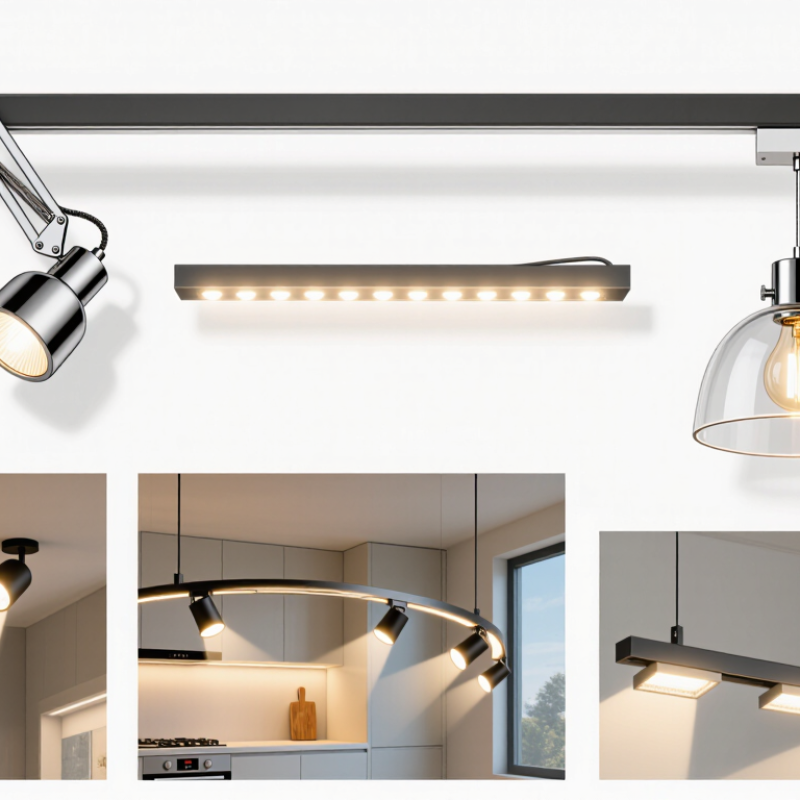
Track-light fixtures usually fall into four practical types: adjustable spot heads, fixed heads, pendant fixtures, and linear or wall-wash heads. Adjustable spots swivel and tilt, directing a narrow beam onto artwork or a kitchen counter. Fixed heads are simpler and suit general task lighting, though they cannot correct a poorly aimed beam. Pendant fixtures hang below the rail, bringing light closer to a dining table or island. Wall washers spread light across a broad surface. The effect is softer, but spacing matters; gaps can leave visible dark stripes.
The rail system matters too. H-, J-, and L-style tracks use different connector standards, so a fixture may not fit every rail. Check the track label and fixture specification before buying. Then consider beam angle, dimming compatibility, and whether the head can be aimed without glare. Small details make a real difference. The U.S. Department of Energy’s Energy Saver guidance says LED bulbs use at least 75% less energy and can last up to 25 times longer than incandescent bulbs. That comparison describes LED technology, not track layouts, so it should not be read as a guarantee for every fixture. I still find beam spread easy to misjudge from product photos; a sample or lighting plan can help.
What Are the Top Types of Track Light Fixtures in 2026?
Typical beam-angle ranges by track fixture type
Narrow-spot and spot heads provide more focused illumination, while flood and wide-flood heads spread light across a larger area. Wall-wash fixtures distribute light asymmetrically, so their beam angles are not directly comparable. Ranges are typical examples; actual specifications vary by fixture.
How Do Track Heads, Pendants, and Specialty Fixtures Differ?
Track heads, pendants, and specialty fixtures differ mainly in where they send light and how easily you can redirect it. Track heads pivot along the rail, making them useful for aiming a beam at artwork, shelves, or a kitchen worktop. A narrower beam creates a crisp highlight, but can leave nearby surfaces dim. Check beam angle and glare, not just appearance. Small details matter.
Pendants hang below the track and bring light closer to a dining table, island, or reading spot. Their lower position can create a more intimate pool of light, though oversized shades may block sightlines. They are not automatically brighter than track heads; output depends on the lamp, shade, and dimmer. Measure ceiling height and viewing angles before choosing.
Specialty fixtures include wall washers, linear modules, and adjustable projectors. Wall washers spread light across vertical surfaces; projectors create tighter accents. The International Energy Agency’s Energy Efficiency 2023 report estimates that lighting uses about 15% of global electricity, a reminder to consider controls and operating hours alongside fixture style. That figure does not mean one track fixture type always saves energy. A practical misstep is choosing from photos alone: finishes can look right, while the installed beam lands in the wrong place. Check compatibility, dimming, and aiming on site.
How to Choose a Track Fixture for Each Lighting Need
What Are the Top Types of Track Light Fixtures in 2026?
Choosing a track fixture starts with the task, not the style. Adjustable spot heads work well over kitchen counters, artwork, or a reading chair because you can aim the beam where it is needed. Narrow beams create crisp accents; wider beams spread light across a work surface. For even coverage along a hallway or long table, consider linear track heads. Wall-wash fixtures can soften a blank wall. Small detail, big difference.
Pendants on a track bring light closer to an island or dining table, while adjustable heads suit spaces that change use. In a living room, aim some light at the walls and keep other beams on seating areas. A common planning mistake is choosing too many narrow spots; the room can feel patchy, with bright circles and dark gaps. Try sketching the beam locations before installation. It is not glamorous, but it helps.
Check ceiling height, track compatibility, and the fixture’s beam angle before buying. Similar-looking track systems may use different connectors, so confirm that heads fit the installed track. Dimming can improve flexibility, but the dimmer, driver, and fixtures must work together. For a low ceiling, compact heads usually feel less intrusive. If you are unsure about wiring or load limits, ask a qualified electrician. Don’t guess.