Top Oilless Reciprocating Compressor Suppliers?
Choosing among the Top Oilless Reciprocating Compressor Suppliers requires more than comparing catalog prices. Buyers should examine air purity, operating pressure, flow stability, service coverage, and expected maintenance intervals. An Oilless Reciprocating Compressor can support laboratories, dental clinics, food plants, electronics production, and pharmaceutical packaging. Each application exposes different risks.
Ron Marshall, a respected compressed-air consultant and energy-efficiency specialist, has said, “Compressed air is often treated as free, although it is one of the plant’s costliest utilities.” His observation remains highly practical. A supplier may advertise low energy consumption, yet the real result depends on duty cycle, inlet conditions, ambient temperature, and operator habits. Ask for measured performance data, not only brochure claims.
Look closely.
Reliable suppliers explain piston-ring materials, cooling design, noise levels, and moisture control. They also provide manuals, spare parts, commissioning support, and realistic warranty terms. A quiet machine beside a clean production line can still fail if replacement parts take weeks to arrive. Service responsiveness matters.
This guide compares leading suppliers through an experience-based lens. It considers technical capability, product consistency, documentation, global support, and customer feedback. The ranking is not perfect. Regional distributors can change the buying experience dramatically. Some smaller manufacturers may also deserve more attention than their online visibility suggests.
Readers should confirm certifications and application suitability with qualified engineers. A compressor that performs well in a dental clinic may struggle in a demanding factory. Careful selection prevents costly surprises.
What Are Oilless Reciprocating Compressors?
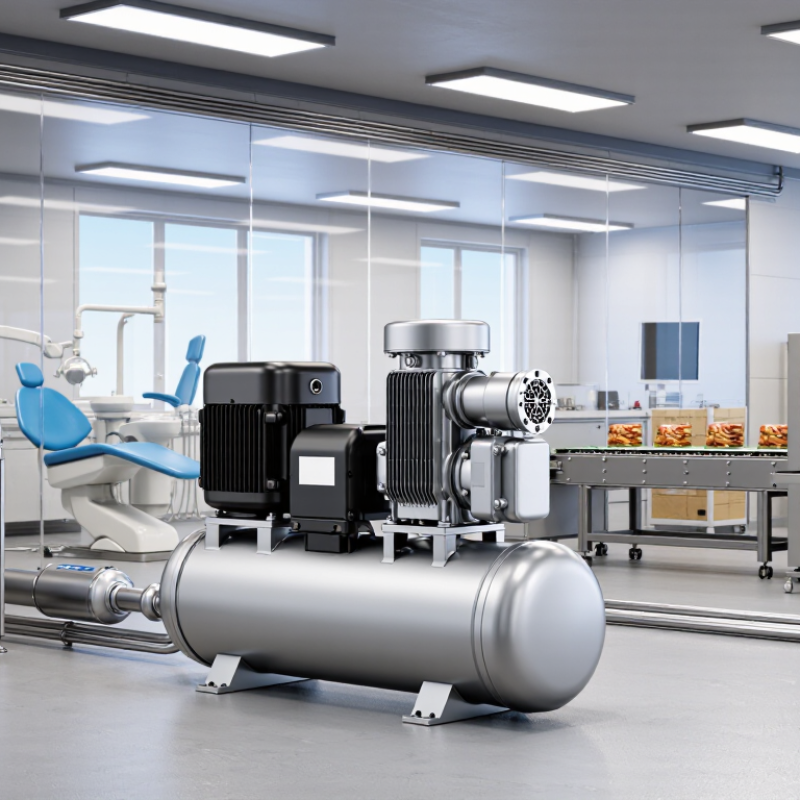
An oilless reciprocating compressor uses pistons to compress air without injecting lubricating oil into the compression chamber. Instead, engineers use self-lubricating rings, specialized coatings, and carefully selected bearing materials. The result is compressed air with minimal oil contamination, which supports sensitive operations such as laboratory testing, dental equipment, food packaging, and electronics assembly.
The working cycle is straightforward. A piston moves down, drawing air through an intake valve. It then moves upward, reducing the chamber volume and forcing air through a discharge valve. In practical inspections, the outlet air may look perfectly clean, but cleanliness still depends on filters, seals, maintenance, and the surrounding environment. This is where assumptions can fail.
Oilless designs can reduce oil-related maintenance and simplify air treatment. However, they may produce more heat or acoustic noise than some oil-lubricated alternatives. Their piston rings also experience wear, especially under continuous duty, high ambient temperatures, or poor ventilation. Technicians should check duty cycle, pressure stability, airflow, noise levels, and replacement-part availability before selecting equipment. A compressor that performs well in a workshop may struggle in a dusty production room. That detail is easy to overlook. Suppliers with clear test data, service guidance, and documented component specifications offer stronger evidence of reliability than attractive performance claims alone.
Key Criteria for Evaluating Leading Suppliers
Top Oilless Reciprocating Compressor Suppliers?
Evaluating an oilless reciprocating compressor supplier requires more than comparing catalog prices. Check how the supplier defines “oil-free” and verifies air purity during operation. Ask for test reports, sampling methods, and acceptable contamination limits. Clear answers show technical confidence.
Review the compressor’s materials, sealing design, cooling method, and expected service intervals. Reliable suppliers provide traceable component records and practical maintenance instructions. Their engineers should explain pressure stability, noise levels, duty cycles, and energy use without hiding limitations. Request performance data from conditions similar to your facility. Laboratory figures may not match a dusty workshop.
Service capability matters greatly. Examine response times, technician training, spare-part availability, and warranty terms. Speak with existing users, preferably those running continuous production lines. Observe a factory acceptance test if possible. Listen for unusual vibration. Inspect the assembly area. Small details can reveal process discipline.
Do not choose the lowest quote too quickly. It may exclude commissioning, filtration, or replacement seals. I have seen polished documents fail to explain downtime risks. That should raise questions. A serious supplier welcomes difficult questions and records corrective actions openly. Independent certification can strengthen confidence, but certificates alone cannot prove long-term field performance. Ask for operating logs, failure histories, and references from comparable applications. Reliability develops through evidence, not promises.
Top Oilless Reciprocating Compressor Suppliers? - Key Criteria for Evaluating Leading Suppliers
Evaluation benchmarks are intended for supplier screening. Final selection should be based on verified test data, duty-cycle requirements, air-quality specifications, lifecycle cost, local service coverage, and applicable regulatory requirements.
Major Oilless Reciprocating Compressor Suppliers
Major oilless reciprocating compressor suppliers usually fall into three groups: established industrial manufacturers, regional specialists, and engineering integrators.
Established suppliers often provide broad capacity ranges, documented testing, and international service networks. Regional specialists may offer faster technical support and more flexible customization. Integrators can adapt compressors for laboratories, food processing, electronics, and medical air systems. The supplier’s role matters as much as the compressor itself.
During equipment selection, I examine pressure stability, flow at working pressure, duty cycle, sound level, and expected piston-ring life.
Oilless operation reduces contamination risk, but it does not remove maintenance needs. Air-end materials, cylinder coatings, cooling design, and intake filtration deserve close review. Ask for performance curves, factory test records, spare-parts lead times, and written service procedures. A credible supplier explains capacity limits instead of promising everything.
Site conditions can expose weak assumptions. High ambient temperatures, dust, frequent starts, or poor ventilation may shorten service life. I have seen a correctly sized unit underperform because its inlet filter was undersized. That lesson remains useful.
Suppliers should support commissioning, vibration checks, and operator training. Warranty terms also need careful reading, especially exclusions for consumables and installation errors. No supplier is perfect. A practical comparison may reveal slower delivery, limited local technicians, or incomplete documentation. Those shortcomings should be discussed before purchase.
Product Features, Technologies, and Industry Applications
Top oilless reciprocating compressor suppliers stand out through measurable performance, not marketing claims. Their systems use oil-free cylinders, low-friction piston rings, corrosion-resistant valves, and thermal protection. Many models also include pressure sensors and automatic drain controls. ISO 8573-1 Class 0 documentation can support sensitive applications, although Class 0 does not mean zero contamination. Buyers should request test conditions, duty-cycle limits, noise data, and service intervals.
The U.S. Department of Energy reports that compressed-air systems may consume 10–15% of industrial electricity. Its guidance also identifies leakage as a major efficiency problem. Oilless designs reduce oil contamination, but they do not remove every operating cost. Heat, moisture, worn seals, and frequent cycling still affect performance. In dental clinics, laboratories, electronics production, food packaging, and paint spraying, clean air supports product quality. A compact 2–10 bar unit may suit intermittent tools, while continuous production needs stronger cooling and redundancy. Selecting by peak pressure alone is a common mistake.
Tips: Compare delivered air at working pressure, not advertised displacement. Ask suppliers for independent efficiency data. Inspect replacement-ring availability before purchase. A low purchase price can become expensive when the compressor runs hot. Supplier claims also deserve practical verification through site trials, because laboratory ratings may not match dusty workshops.
Top Oilless Reciprocating Compressor Suppliers? Product Features, Technologies, and Industry Applications
Typical operating pressure by application for oil-free reciprocating compressors. Values are representative engineering ranges commonly used in these sectors; actual requirements depend on system design and equipment configuration.
Oil-free reciprocating compressors are selected where clean air, low contamination risk, compact size, and reliable intermittent operation are important. High-pressure PET preform production typically requires substantially higher discharge pressure than medical, laboratory, or electronics applications.
How to Compare Suppliers and Select the Right Model
Choosing an oilless reciprocating compressor supplier requires more than comparing catalog prices. A reliable supplier should explain piston materials, sealing methods, cooling design, and expected service intervals. Ask for measured flow and pressure data, not only rated figures. Test conditions matter.
Compare suppliers through evidence. Request factory quality records, material traceability, inspection procedures, and documented air-purity results. Check whether the supplier can support installation, commissioning, troubleshooting, and spare-parts delivery in your region. A clear warranty is useful, but response time may matter more during production. Speak with current users if possible. Their maintenance experience often reveals weaknesses hidden in polished brochures.
Model selection should begin with actual demand. Record required pressure, average flow, peak flow, operating hours, start-stop frequency, ambient temperature, and installation altitude. A compressor sized only for peak demand may waste energy. One sized for average demand may struggle during sudden loads. Consider receiver capacity, noise limits, cooling space, and electrical compatibility. Lifecycle cost deserves attention, including valve replacement, ring wear, downtime, and energy use. A cheaper unit can become expensive after repeated service calls. No checklist is perfect. Recheck assumptions with logged plant data before purchasing, and request a performance test under conditions close to your application.