Top 10 Dishwasher Stamping Die Manufacturers Worldwide
Dishwasher production depends on more than appliance demand. It also relies on accurate, durable stamping dies that shape stainless-steel tubs, brackets, and panels. Small deviations matter. They can affect fit, surface quality, and assembly speed. For manufacturers, die design and maintenance influence production consistency, material waste, and the cost of each component.
Industry data offers useful context, though not a direct ranking of die suppliers. World Steel Association’s World Steel in Figures 2024 reports global crude steel production above 1.8 billion tonnes in 2023, underscoring the scale of the metalworking supply chain. The International Energy Agency’s Energy Efficiency 2023 report also highlights efficiency standards and policies as important tools for improving appliance performance. These trends place pressure on appliance makers to deliver reliable products while controlling manufacturing costs. The link is indirect, but relevant.
This guide examines ten Dishwasher Stamping Die manufacturers worldwide through practical factors: engineering capability, tooling range, quality systems, production capacity, and after-sales support. It also considers whether suppliers can handle complex forming operations and repeat orders, not just show polished samples. Company information and market claims can change, so buyers should verify current certifications, references, and technical specifications before selecting a partner. A ranking can simplify the search. It cannot replace a factory audit. And supplier fit is rarely universal; a capable large-scale toolmaker may not suit a smaller project with tight customization needs. That deserves a closer look.
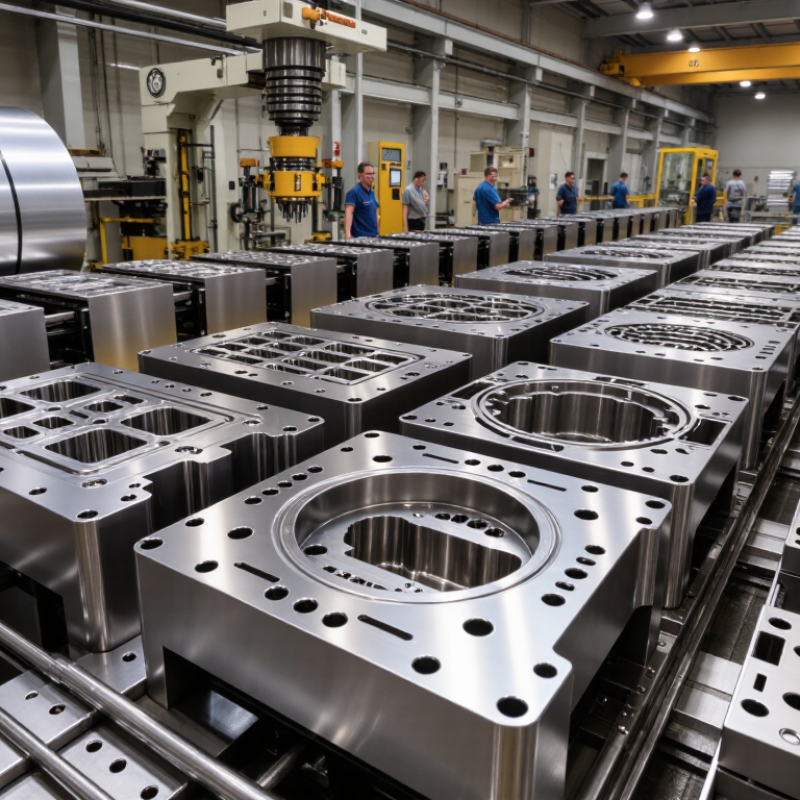
Dishwasher Stamping Dies and Their Role in Appliance Manufacturing
Dishwasher stamping dies turn flat sheet or coil into parts that must fit a wet, vibration-prone cabinet. Blanking defines the outline; piercing creates openings; forming and deep drawing shape tub walls, door skins, and brackets. A small flange shift can complicate sealing or assembly. Small errors matter.
The scale of metal supply is significant, but it is not dishwasher-specific. World Stainless reported 58.4 million tonnes of stainless steel production in 2023. The World Steel Association recorded 1,888.2 million tonnes of crude steel output that year in World Steel in Figures 2024. These figures show broad material capacity, not appliance demand.
For die makers, coil grade, thickness variation, and surface finish still guide tool design. Production trials should check springback, draw depth, lubrication, and scrap removal. Sensors and tryout presses can help detect wrinkles and burrs early.
Yet a polished die may still cause delays if operators cannot clear scrap easily. That detail is easy to overlook. A practical measure of success is consistent parts across shifts, with repeatable dimensions and maintainable tooling—not simply a fast first run.
Key Capabilities of Dishwasher Stamping Die Manufacturers
Key Capabilities of Dishwasher Stamping Die Manufacturers
Dishwasher stamping dies must form large, thin panels without visible dents or uneven edges. Capable manufacturers translate part drawings into die designs that account for sheet thickness, material direction, bend radii, and springback. These details matter around door skins, inner tubs, and reinforcement brackets. Simulation can identify likely wrinkles or splits before steel is cut, though results still need physical testing. Real sheet behaves imperfectly.
Manufacturing capability includes accurate machining, controlled assembly, and practical tryout experience. During trials, technicians inspect formed parts for dimensional drift, surface marks, and trim consistency. They may adjust clearances, forming pressure, or lubrication to correct defects. Reliable inspection records help track changes between production runs. Tool life matters, too: accessible wear components and clear maintenance guidance can reduce avoidable downtime. No die stays perfect forever.
Tips: Ask how the supplier validates parts using production-grade sheet, not only digital models. Request sample inspection data and a maintenance plan. Check whether the team can explain likely trade-offs in plain language. A polished presentation is useful, but actual trial results tell more.
Global Markets and Manufacturing Regions
Dishwasher stamping-die production follows appliance assembly, sheet-steel supply, and skilled tooling clusters. East Asia is a major center, supported by dense networks of metal processors and component plants. The World Steel Association’s World Steel in Figures 2024 reports 2023 crude-steel output of 1,019.1 million tonnes in China, 140.2 million in India, 87.0 million in Japan, and 66.7 million in South Korea. Steel output is not die output. Still, it signals access to material and industrial capacity. That distinction matters.
Europe and North America remain important for precision tooling, engineering services, and nearby appliance production. UNIDO’s International Yearbook of Industrial Statistics 2024 compares manufacturing value added and employment across economies, offering context beyond steel volumes. Buyers assessing regional suppliers should also check press capacity, die-maintenance skills, lead times, and the availability of trial stamping. A region can have strong factories but limited specialist tooling depth. The picture is imperfect: public datasets rarely isolate dishwasher dies from wider appliance or automotive tooling. A supplier’s local process record may therefore reveal more than a country-level ranking.
Top 10 Dishwasher Stamping Die Manufacturers Worldwide
Global Markets and Manufacturing Regions
Vehicle production is shown as a broad indicator of manufacturing capacity and potential demand for stamping dies; it is not a ranking of dishwasher-die manufacturers or dishwasher output. Figures are 2023 motor-vehicle production, in millions of units. Source: OICA, 2023 production statistics.
Profiles of Ten Dishwasher Stamping Die Manufacturers Worldwide
Profiles of Ten Dishwasher Stamping Die Manufacturers Worldwide
A useful comparison of ten dishwasher stamping die manufacturers looks beyond press size. It examines die design, material control, maintenance support, and proven production experience. The profiles can cover specialists in progressive dies, transfer tooling, deep-drawn panels, precision blanking, and line automation. Other makers may focus on modular tooling, rapid replacement parts, prototype work, or production support near appliance factories. These differences matter when a die must form a broad door panel without wrinkles or keep a narrow bracket dimension stable across long runs.
The World Steel Association’s World Steel in Figures 2024 reports 1,892.2 million tonnes of crude steel production in 2023. That figure describes the scale of the material supply chain, not demand for dishwasher dies. Still, it highlights why experienced toolmakers pay close attention to sheet thickness, springback, and surface condition. Small errors travel. A poorly matched blank can cause scrap, extra adjustments, and visible panel defects. Buyers should compare sample parts and documented process controls, not just catalogue claims.
The ten profiles should also distinguish design capability from after-sales support. Ask how each manufacturer handles die trials, wear components, and changes to appliance geometry. A maker may deliver excellent tooling yet offer limited help once it reaches the customer’s press line. One caveat: published cycle-time and service figures are not always measured consistently. Treat them as questions for verification, not a clean ranking.
Factors for Evaluating and Selecting a Die Manufacturer
When comparing dishwasher stamping die manufacturers worldwide, look beyond quoted price and polished sample parts. A suitable supplier should understand the component’s material, thickness, shape, and production volume. Ask how the die handles features such as mounting holes, bends, and narrow edges. These details affect feeding, forming, and part consistency. Request drawings, tolerance records, and trial-run results, not just assurances.
Review the manufacturer’s engineering process and shop-floor capability. Can its team explain die clearance, press tonnage, feed pitch, and expected tool life for your part? Ask how it checks burr height and dimensional variation after a run. Confirm what maintenance guidance, spare components, and troubleshooting support are included. A flawless sample alone proves little; it may not reflect performance across a long production run. Communication matters, too. Unclear answers during design review can become costly delays later.
Tips: Share a representative part drawing and production target before requesting a quote. Compare delivery scope, trial conditions, and after-sales support alongside price. If a supplier cannot explain a proposed design in plain terms, pause and ask again. Small oversight can happen, so document agreed tolerances and revision changes before tooling begins.