7 Tactical Watch Buying Tips for Global Buyers
A Tactical Watch should be chosen for the work it must do, not merely for the rugged image it projects. Watch journalist Ariel Adams, founder of aBlogtoWatch, is a useful reference for practical, function-led watch evaluation. The line below is an editorial summary, not a verified quotation from Adams: “Choose the features you will rely on, not the ones that only look impressive.”
That principle matters when comparing watches across markets. Start with legibility: can you read the dial quickly in dim light, through glare, or while wearing gloves? Check the case size against your wrist and the cuff of your jacket. Confirm the water-resistance rating, battery or charging needs, strap material, and access to service where you live. A bright display may help outdoors, but it can drain power faster. A thick case may feel reassuring in a product photo and awkward after a full day.
The following seven tactical watch buying tips help global buyers separate useful specifications from persuasive marketing. They focus on fit, durability, movement, visibility, power, maintenance, and value. Compare the manufacturer’s stated specifications with independent reviews, and verify warranty and service details before purchasing. Small print matters. So does comfort.
There is no universal best choice. A watch suited to a humid commute may not suit cold-weather field use. Be honest about your routine; buyers can overestimate how often they need extreme features. A well-chosen Tactical Watch should be dependable, readable, and comfortable enough to wear when the novelty has faded.
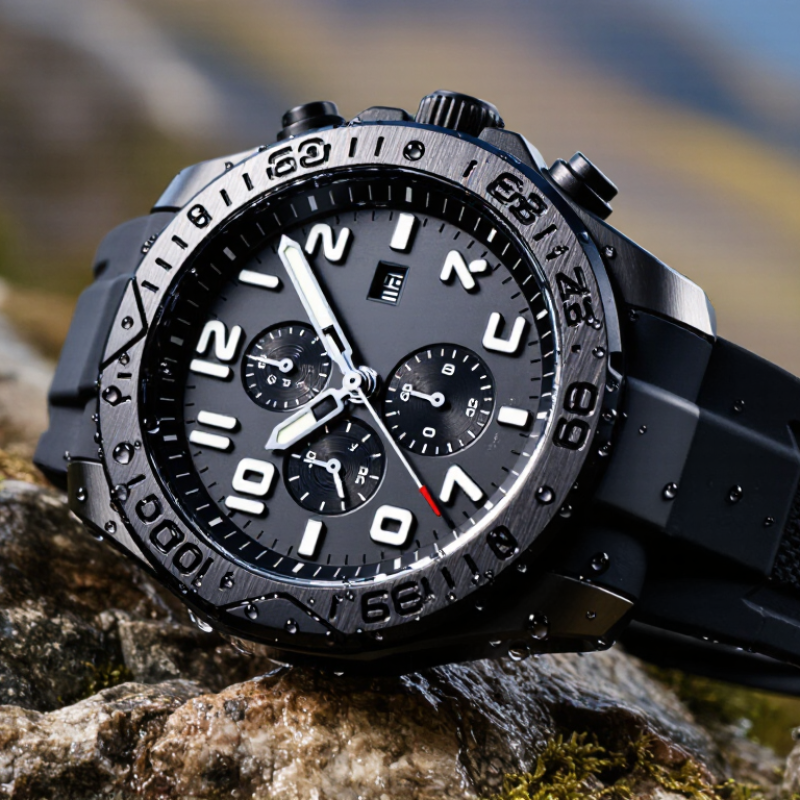
Map the Mission: Separate Field, Dive, and Everyday Requirements
Start with the job, not the look. A field watch should be easy to read at a glance, even in weak light or rain. Check for clear numerals, useful lume, and a case that will not snag on a jacket cuff. A simple strap can be easier to replace after dust, sweat, or travel wear. Small details matter. If you work outdoors, test the crown and controls with cold or gloved hands when possible.
A dive watch needs more than a high water-resistance number. Read the maker’s guidance, check the stated testing standard, and remember that seals age and need inspection. A rotating timing bezel should turn securely and remain legible underwater. For everyday use, comfort may outweigh rugged specifications: try the watch for several hours and notice its weight, thickness, and clasp pressure. Think about where you can get routine service, especially if you travel often. Hot climates, humidity, and frequent time-zone changes can affect comfort and convenience. I have seen buyers focus on features they rarely use; it is an easy mistake. Write down the conditions you actually face, then compare only the functions that solve them. The perfect match is not always obvious.
Screen Accuracy: COSC Mechanical Chronometers Allow −4/+6 Seconds per Day
COSC’s published criteria set a demanding benchmark: a certified mechanical chronometer must average between −4 and +6 seconds per day during testing. Under the COSC protocol, movements are measured over 15 days, in five positions and at three temperatures. That gives buyers a meaningful, standardized reference—not a promise that every watch will keep identical time on every wrist. The result describes performance under controlled conditions.
When comparing watches, ask whether the certificate applies to the movement or the fully cased watch. Case assembly, wrist position, temperature changes, and daily wear can all shift real-world results. Not the whole story. After purchase, compare the watch with a reliable time source at the same hour each day for a week, and note how it rests overnight. A phone is convenient, but remember that small reading delays can muddy the comparison. I would not reject a watch over one unusual day; patterns matter more. COSC certification and ISO 3159 provide useful technical context, while your own short timing log shows whether the watch’s behavior suits your routine.
Test Magnetic Resilience: ISO 764 Uses a 4,800 A/m Exposure
Magnetic fields can quietly disrupt a mechanical watch. A phone clasp, tablet cover, or loudspeaker may leave a watch running fast. ISO 764:2020 sets a magnetic-resistance test using a 4,800 A/m field. In air, that is roughly 6 millitesla, or 60 gauss. The figure is a controlled test benchmark, not a guarantee against every magnetic source. Small detail, big difference.
Tip: Ask whether the watch was tested to ISO 764 and request the stated result. Check the movement and case specifications, too; a label alone tells you little. For a practical check, note the time, keep the watch away from obvious magnets, then compare it with a trusted reference later. If it suddenly gains time, have a watchmaker assess it. I would not diagnose magnetism from one quick comparison.
The test data describes a defined exposure, while daily environments vary in distance, duration, and field strength. ISO’s benchmark is useful when comparing models, but it cannot reproduce every desk, travel bag, or workshop. One limitation: buyers may focus on the number and overlook serviceability. Ask how the watch can be checked and demagnetized locally before purchase. A clear answer matters.
Test Magnetic Resilience: ISO 764 Uses a 4,800 A/m Exposure
ISO 764 specifies a magnetic-field exposure of 4,800 amperes per metre (A/m) for its resistance test.
The bar shows the standard’s specified test-field strength, not a measurement of any particular watch. Check product documentation for claims of compliance.
Validate Water Claims: ISO 6425 Requires Diver’s Watches to Reach at Least 100 m
A diver’s watch should meet a clear minimum: ISO 6425 specifies water resistance of at least 100 metres. But a “100 m” marking alone does not confirm that a watch complies with the standard. Ask whether the specific model has been tested and declared compliant, rather than relying on a product-page phrase. Pressure is not depth. Movement, temperature changes, and a worn seal can affect real-world performance.
Tip: Request model-specific test details from the seller. Check that the crown and caseback are secured as instructed, and look for clear guidance on water-resistance checks. A vague promise is not enough.
For global buyers, compare the stated rating with your actual use, not just the number on the dial. ISO 6425 compliance is a stronger reference than an unsupported water-resistance claim, but it does not make a watch maintenance-free. Seals age, especially after repeated exposure to heat, salt, or impacts. I would not assume an older watch remains safe just because it once passed a test. That detail is easy to miss. Before swimming or diving, have the watch inspected if its service history is unclear.
Check Global Ownership: Confirm Battery Access, Warranty, and Service Reach
A watch that travels well on paper may be awkward to maintain in real life. Before buying, check whether local watchmakers can replace its battery and reseal the case. Ask what the service costs, how long it takes, and whether opening the case affects water resistance. A battery change is simple. The details are not.
The Federation of the Swiss Watch Industry reported that Swiss watch exports reached about 16.9 million units in 2023. That figure shows how widely watches move across borders, but it does not prove that repair support exists near your home. Check the warranty’s country coverage, required proof of purchase, and whether shipping to a service center is your responsibility. Get the answer in writing. A polished warranty card can still leave practical gaps.
Also confirm the battery type and whether it is stocked locally; a common cell is easier to replace than a specialist one. Ask if service centers test water resistance after battery replacement, and request a written estimate before approving extra work. I would double-check even a reassuring sales answer, since service networks can change. This step feels tedious. It can prevent a watch from sitting unused while a small part crosses an ocean.