What Are Micro Switches and How Do They Work?
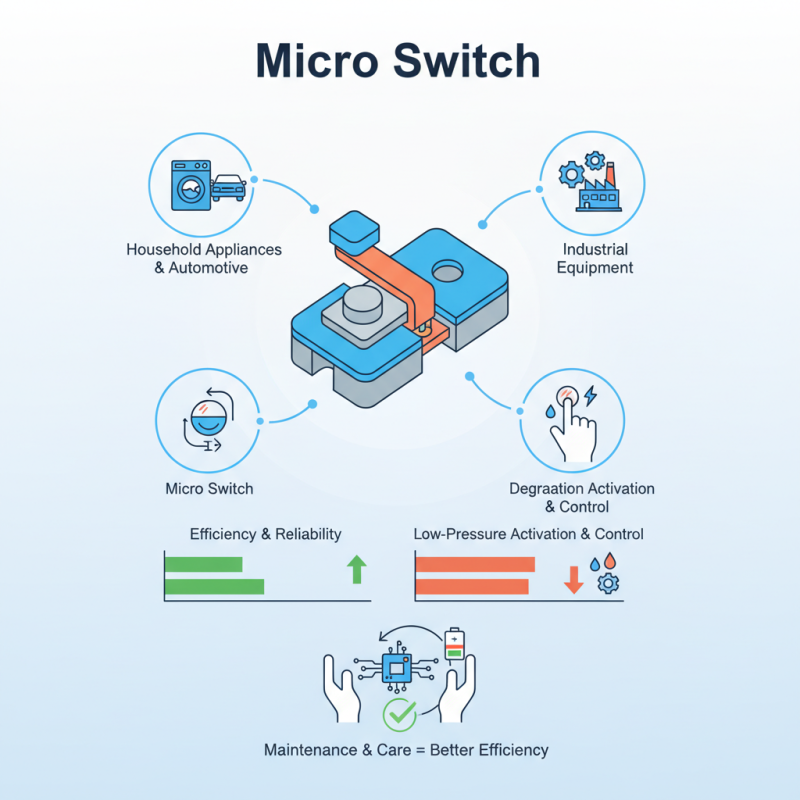
micro switches are essential components in many devices. Their small size belies their significant impact on functionality. These switches are widely used in household appliances, automotive controls, and industrial equipment.
When you press a micro switch, it activates a mechanism, often leading to a larger action. This simple concept allows users to control devices easily. Micro switches use a very low-pressure activation force. This design makes them efficient and reliable for various applications.
However, not every micro switch works perfectly. Some can degrade over time. Factors like environmental conditions and mechanical wear can affect their performance. Understanding this is crucial for anyone relying on these switches. Taking care of and maintaining micro switches can lead to better efficiency.
What Are Micro Switches?
Micro switches, often found in various devices, play a crucial role in controlling electrical circuits. They are small, mechanical switches that respond to physical changes, such as pressure or movement. The design of a micro switch allows for a quick and reliable activation. When a lever or button is pressed, a tiny internal mechanism makes or breaks a circuit. This action is audible—often producing a clicking sound, indicating it has been engaged.
The connection mechanism within a micro switch is quite fascinating. It utilizes a spring-loaded actuator that quickly toggles between open and closed states. This creates a precise and dependable response to the user’s action. Despite their simplicity, micro switches can sometimes present challenges. Improper installation or wear and tear can lead to inconsistent performance. Regular maintenance can be a hassle, but it's important to keep them functioning well.
In many devices, micro switches are essential for safety features. For instance, they can prevent a machine from operating when a door is open. Yet, their sensitivity can be a double-edged sword. Too much pressure may cause false triggering, while too little may fail to engage. Understanding their limitations can foster better use in everyday application, making our interactions with technology smoother.
The Basic Components of Micro Switches
Micro switches are essential components in various electronic devices. They are designed to act as a low-profile, reliable triggering mechanism. The basic components of a micro switch include a spring, a movable contact, and a stationary contact. When a force is applied, the spring compresses, causing the movable contact to touch the stationary contact, thus completing an electrical circuit.
According to industry reports, micro switches have a lifespan of over one million cycles. Their robustness makes them ideal for applications in appliances, automotive systems, and industrial equipment. They often feature a compact design, which allows for easy integration into tight spaces. This compactness, however, might lead to potential overheating in high-load applications, demanding careful design considerations.
In addition to their mechanical structure, factors like environmental resistance must be considered. Some micro switches are rated for different environmental conditions. For instance, switches exposed to moisture should have sealed components. This adds complexity to the design and can increase costs. It's crucial to balance performance and expense when selecting a micro switch for specific applications.
How Micro Switches Operate Mechanically
Micro switches operate based on a simple mechanical principle. When force is applied to a lever or actuator, the switch "snaps" into action. This snapping action is critical for their reliability. The movement creates a clear and fast electrical signal. Typically, the mechanism includes a spring that determines engagement sensitivity. The actuation force can vary, but it usually falls between 50 grams and 1 kilogram.
In many applications, micro switches are favored because of their quick response time. Research shows they can react in as little as 1 millisecond. This speed is important in automation tasks. For instance, in safety systems, any delay could pose risks. The mechanical design also contributes to their lifespan. Engineers report that with proper use, micro switches can last over a million cycles.
Some drawbacks exist. The mechanical nature can lead to wear over time. Repeated use might decrease precision. Variability in the actuator design can also affect performance. Some micro switches may struggle in environments with extreme temperatures or humidity. Thus, while they are widely used, understanding their limitations is vital for optimal application.
Micro Switches Operating Conditions
This bar chart illustrates the performance metrics of micro switches under various operating conditions. Each parameter indicates a key performance characteristic that contributes to the functionality and reliability of micro switches.
Applications of Micro Switches in Various Industries
Micro switches are small but powerful components widely used across various industries. They are designed to control electrical circuits in response to physical pressure or movement. This technology is crucial in manufacturing, automotive, and even household appliances.
In manufacturing, micro switches help detect the position of machinery parts. Utilizing them can ensure safety and efficiency. For instance, a micro switch can signal when a machine door is open. However, improper placement might lead to false triggers. It’s important to assess the positioning of these switches before finalizing designs.
In the automotive sector, micro switches are vital for ignition systems and safety features. They might control lights or alert drivers when seatbelts are unlatched. Yet, reliance on these components can sometimes result in oversights. A malfunction can create significant issues, affecting driver safety. Regular checks can mitigate risks and improve reliability in such applications.
Benefits and Limitations of Using Micro Switches
Micro switches are small but powerful devices that play a crucial role in many applications. They work by using a physical actuator to trigger a switch when a certain force is applied. This mechanism makes them ideal for a wide range of uses, from home appliances to industrial machines.
Tips: When working with micro switches, ensure proper mounting. A secure fit enhances performance and durability.
The benefits of micro switches are plentiful. They provide reliable operation, often lasting for millions of cycles. Their compact size fits easily into tight spaces. However, they may struggle under extreme conditions like high moisture or dust, affecting performance.
Tips: Consider the environment where the switch will be placed. If it's prone to dust or humidity, you might need a protective enclosure.
While micro switches are efficient, they have limitations. Their actuator must be engaged precisely. If misaligned, the switch won't function properly. This can lead to unintended issues in automated systems. Always check alignment during setup to avoid future problems.
Tips: Regular maintenance can help prolong life. Look for wear and replace if necessary.