Top 10 Integrated Solar LED Street Light Suppliers
Choosing an Integrated Solar Led Street Light supplier takes more than comparing prices or advertised brightness. A reliable shortlist should show how each company handles product design, quality control, and support after installation. Details matter. Ask for clear specifications covering panel output, battery capacity, LED performance, protection rating, and expected operating hours. These figures help buyers judge whether a fixture suits a rural road, parking area, or public walkway. They also make supplier claims easier to compare.
This overview introduces ten suppliers and the factors that can help distinguish them. It considers product range, manufacturing experience, customization options, warranty terms, and access to replacement parts. Where available, test reports and relevant quality certifications can offer useful evidence, though documents should be checked for scope and validity. A bright sample is not enough. Battery performance during cloudy periods, heat management, and installation guidance matter in daily use. No shortlist is perfect. Supplier information can vary, and published specifications do not always reflect conditions at a particular site. Buyers should confirm the details directly and match system capacity to local weather, pole spacing, and nighttime operating needs. A careful comparison cannot remove every uncertainty, but it can reduce costly surprises.
Understanding Integrated Solar LED Street Lights
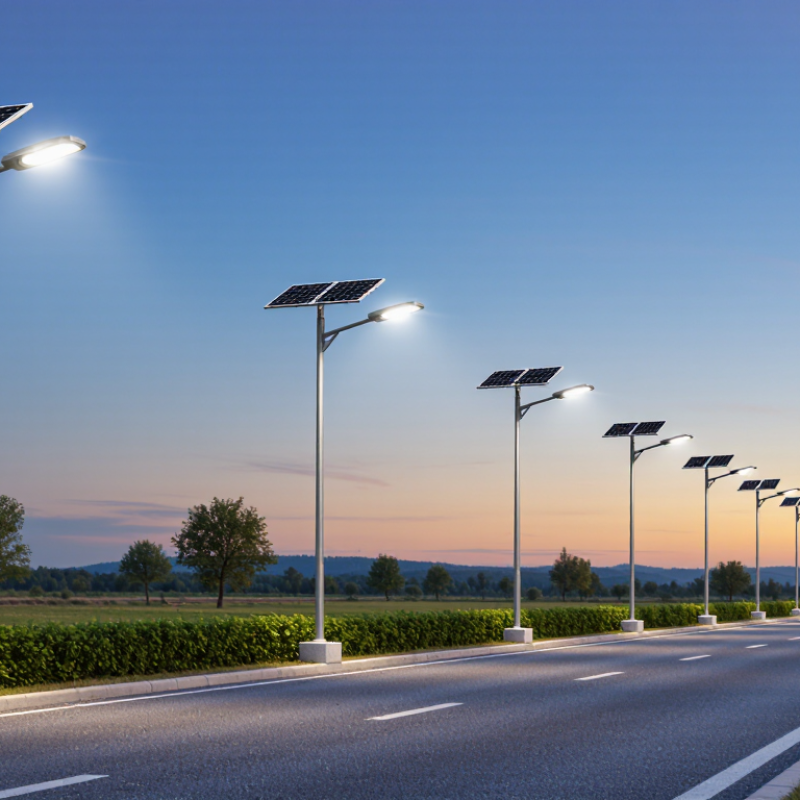
An integrated solar LED street light combines the photovoltaic panel, battery, controller, and LED fixture in one compact unit. The panel collects sunlight during the day, while the controller manages charging and switches the lamp on at dusk. Some models also dim during quiet hours to conserve stored energy. Installation can be simpler because fewer separate cables and components are needed. That matters. But compact design does not guarantee reliable performance. Heat buildup, battery quality, and poor charge control can shorten service life.
Choosing a suitable unit starts with the site. Estimate nightly operating hours, required brightness, and the local pattern of cloudy days. Check whether nearby trees or buildings will shade the panel, and confirm that its angle can be adjusted for the location. Ask suppliers for the battery capacity, expected autonomy, lighting output, and test conditions behind any performance claims. A larger battery may provide more reserve, but it can also add cost and weight. One detail is easy to overlook: winter sunlight may be much weaker than summer sunlight. Supplier specifications help, but they cannot fully predict every site. A small on-site trial can reveal issues that a brochure misses.
Criteria for Evaluating Solar Street Light Suppliers
When evaluating integrated solar LED street light suppliers, compare measured performance, not headline wattage. Ask for independent photometric test reports showing delivered lumens, beam distribution, and uniformity at road level. A bright fixture can still leave dark patches between poles. Request battery capacity, chemistry, cycle-life conditions, and operating-temperature limits, plus the panel’s rated output and charging assumptions. Small details matter: shade from a nearby tree can change daily charging.
Check how the supplier sizes systems for local sun hours, rainy periods, and required overnight autonomy. IRENA’s Renewable Power Generation Costs in 2023 report found utility-scale solar PV’s global weighted-average electricity cost fell 12% year over year, to USD 0.044 per kWh. That is useful context, not a street-light cost estimate; project economics depend on batteries, installation, and maintenance. Ask for the assumptions behind any savings claim.
Also review warranty exclusions, replacement-part availability, corrosion protection, and service response times. Can the battery be replaced without discarding the whole luminaire? Often overlooked. A realistic supplier should explain what happens after several cloudy nights, and admit where its forecast is uncertain.
Profiles of Ten Integrated Solar LED Street Light Suppliers
Profiles of Ten Integrated Solar LED Street Light Suppliers
These ten profiles reflect different supplier strengths, not verified rankings. One supplier may focus on lighting design; another may specialize in battery integration or custom poles. Some serve municipal projects, while others support remote roads with limited grid access. A high-volume manufacturer may offer standard configurations and steady output. A project-focused supplier may provide site assessments and tailored layouts. Other profiles include suppliers emphasizing long-life batteries, high-efficiency panels, motion controls, corrosion-resistant enclosures, or modular replacement parts. The tenth profile is a systems integrator, coordinating components and installation support. Each approach has trade-offs. Details matter.
Tips: Request a datasheet showing panel wattage, battery capacity, LED output, and operating temperature. Ask how performance changes after several cloudy days. Check the warranty terms and the local availability of replacement batteries.
Compare suppliers using the same project conditions. A 6-meter pole on an open road differs from a shaded path near trees. Ask for lighting calculations, installation references, and clear test methods. Confirm whether quoted autonomy reflects real operating settings, not ideal laboratory conditions. Test it. Specifications can look convincing, yet poor placement or undersized storage may leave a road dim before dawn. A careful review should include service access and component replacement, too.
Comparing Supplier Products, Capabilities, and Services
Comparing integrated solar LED street light suppliers means looking beyond brightness claims. Check the panel’s rated output, battery chemistry, LED efficacy, and operating time after several cloudy days. Ask whether the stated runtime assumes full battery charge or includes dimming. A sample unit can reveal details that a table misses, such as cable sealing, pole-mount fit, and how easily the battery compartment opens. Small details matter outdoors.
Tips: Request test reports, warranty terms, and replacement-part availability in writing. Compare quotes using the same pole height, lighting schedule, and autonomy requirement. A low price may exclude installation hardware or shipping. Check what “five-year warranty” actually covers.
Supplier capability matters as much as product design. Ask how systems are configured for local sunlight, road width, and seasonal weather. A capable team should explain its assumptions and flag limitations, not promise identical performance everywhere. Confirm lead times, installation guidance, and how faults are diagnosed remotely. I would not rely on a sales chart alone; it may simplify real site conditions. Even a good supplier can miss a constraint, so share site photos and request a clear, itemized proposal before choosing.
Top 10 Integrated Solar LED Street Light Suppliers
Comparing Supplier Products, Capabilities, and Services — Road-lighting reference benchmarks
This chart shows maintained average road-surface luminance benchmarks for EN 13201 lighting classes M1–M6, not measurements of individual suppliers. Compare supplier products using project-specific photometric files and the lighting class required for the road.
Choosing a Supplier for Different Project Requirements
When choosing among integrated solar LED street light suppliers, start with the site, not the catalogue. A coastal road needs corrosion-resistant housings; a shaded lane needs careful placement and realistic solar-yield estimates. Ask for a photometric layout, battery capacity, autonomy days, and lighting output at the end of the night—not only peak lumens. IRENA reported that the global weighted-average cost of new utility-scale solar PV fell 12% in 2023, to USD 0.044 per kWh. That trend signals lower PV costs, but it does not prove a street-light system will last. Different job.
For remote roads, prioritize replaceable batteries, clear maintenance instructions, and available spare parts. For urban paths, check glare control, uniformity, and whether dimming schedules match actual use. Request test reports for ingress protection, temperature performance, and battery cycling, then confirm the test conditions match your climate. A warranty matters only if its exclusions, response time, and replacement process are clear. One weakness in many comparisons: quoted runtime often assumes ideal sunlight and a new battery.
Tip: Compare suppliers using the same site data and lighting requirement. Check monthly solar resource with the World Bank’s Global Solar Atlas, then ask each supplier to show its sizing assumptions. Keep the calculation. It may reveal an undersized system before installation.