How to Choose the Best AC DC Power Supply for Your Needs?
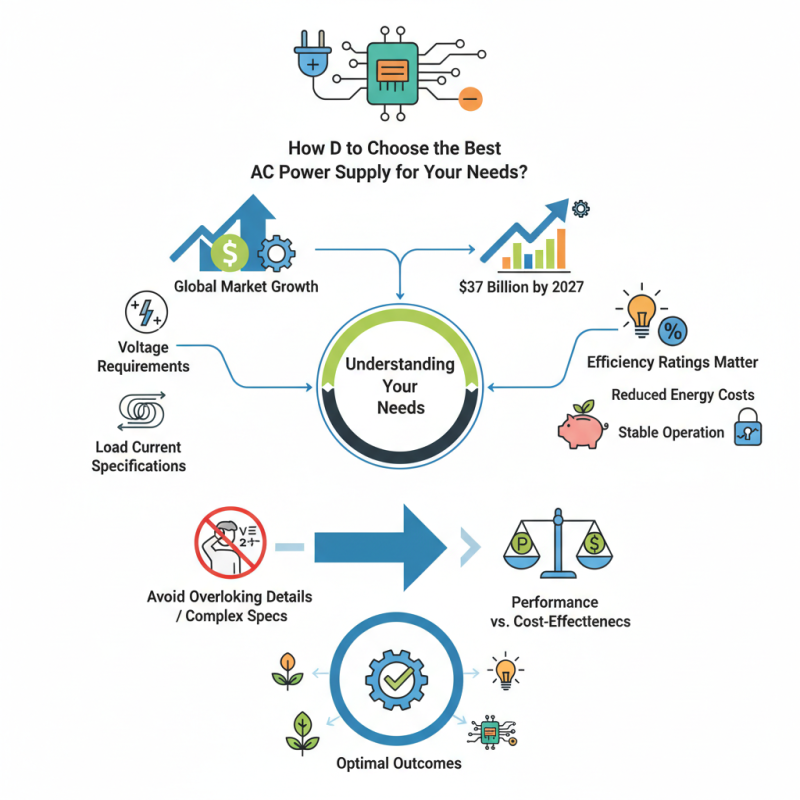
Choosing the right Ac Dc Power Supply is crucial for any electronic project. Reports show that the global market for power supplies is expected to reach $37 billion by 2027. The growth highlights the increasing demand for reliable and efficient power solutions in various applications.
Understanding your specific needs is vital. Various factors, such as voltage requirements and load current specifications, play a significant role in selecting the best AC DC power supply. Many users often overlook these details, which can lead to suboptimal performance or device failure.
Additionally, efficiency ratings matter. A well-chosen power supply can reduce energy costs and ensure a stable operation. However, not all options boast high efficiency, and many consumers may find themselves tangled in complex specifications. Reflecting on the choice of an AC DC power supply ensures the right balance between performance and cost-effectiveness. Your projects deserve the best support for optimal outcomes.
Understanding AC and DC Power Supplies: Key Differences
When selecting a power supply, it is crucial to understand the differences between AC and DC power. AC, or alternating current, is commonly used in household outlets. It changes direction periodically, which allows it to transmit electricity efficiently over long distances. Most household appliances, like refrigerators and air conditioners, operate on AC power.
DC, or direct current, flows in one direction. It is used in batteries, solar panels, and electronic devices like mobile phones. Many devices need DC power because they require a steady voltage. If you use AC power for these devices, it can cause damage or malfunction.
Choosing between AC and DC can be challenging. Sometimes, it's unclear which you need. Consider the devices you will power. Analyze the required voltage, current, and wattage specifications. If you’re uncertain, consult additional resources. It’s not always a straightforward decision, and mistakes can lead to bigger issues.
Assessing Power Requirements: Voltage and Current Needs
When selecting the right AC DC power supply, understanding your voltage and current needs is crucial. Assessing these requirements helps ensure your devices function correctly. Different devices have varying voltage requirements. For example, some gadgets need 5V, while others might require 12V or even more. Knowing this is the first step to making an informed choice.
Current needs are equally important. Each device draws a specific amount of current, measured in amperes. Exceeding this can cause damage. Calculating total current is essential if you plan to power multiple devices. Consider the maximum draw from each one. Keep in mind that some devices may fluctuate in their current needs. This variance could impact your overall power supply selection.
It's easy to overlook these details in the selection process. Many assume that all power supplies are adequate. This belief can lead to poor performance or device failure. Take time to assess your needs thoroughly. Carefully matching voltage and current will likely yield better results. Don't rush the decision; it's worth the effort.
Evaluating Power Supply Types: Linear vs. Switching
When it comes to power supplies, two main types stand out: linear and switching. Linear power supplies are known for their simplicity and low noise levels. They provide a stable output voltage and are often easier to design. However, they can be bulky and inefficient, especially at higher current levels. If you need a lightweight solution, linear might not be your best option.
Switching power supplies, on the other hand, are more compact and efficient. They convert electrical energy using high-frequency switching. This design allows them to handle various voltages without significant size increases. However, they may introduce electrical noise that can affect sensitive devices. It’s essential to consider the trade-offs for your specific needs.
Quality and application matter. A linear supply might be perfect for audio equipment where noise is critical. For battery-operated devices, a switching supply could save space and energy. Analyze your requirements carefully. Sometimes, the choice isn’t clear-cut, and a combination of both types might offer the best solution.
Considerations for Efficiency and Thermal Management
When selecting an AC DC power supply, efficiency and thermal management are critical factors. Efficiency indicates how much of the input energy is transformed into output power. A higher efficiency means less wasted energy, which is vital for cost savings and sustainability. Look for units with an efficiency rating above 80%. This can significantly reduce your energy bills and minimize heat generation.
Thermal management plays a crucial role in performance and reliability. Excess heat can damage components. Employing proper heat sinks or fans can help maintain optimal operating temperatures. Additionally, consider the ambient temperature where the power supply will operate. Power supplies in warmer environments may require better airflow or more robust cooling solutions. Ensure that you take into account the layout of your workspace and any potential heat sources nearby.
Sometimes, users overlook the size constraints of power supplies. A compact design is appealing, but it may sacrifice performance. Smaller units can struggle with proper heat dissipation. Thus, it’s essential to balance size with cooling options. Reflection on these aspects can guide you to a more suitable choice. Each application is different, so tailor your selection to your specific needs.
How to Choose the Best AC DC Power Supply for Your Needs?
| Specification | Option 1 | Option 2 | Option 3 |
| Output Voltage | 5V | 12V | 24V |
| Current Rating | 2A | 1.5A | 1A |
| Efficiency Rating | 85% | 90% | 95% |
| Thermal Management | Passive Cooling | Active Cooling | Fanless Design |
| Price Range | $10 - $20 | $20 - $35 | $35 - $60 |
Safety Features and Certification Standards in Power Supplies
When selecting an AC DC power supply, safety should be a top priority. Recent industry reports indicate that about 30% of power supply failures are due to inadequate safety features. It's crucial to look for units with over-voltage, over-current, and short-circuit protections. These features can prevent catastrophic failures and extend the lifespan of connected devices.
Certification standards like UL, CE, and FCC are also vital. These certifications ensure that the power supply has undergone rigorous testing. According to a report from the International Electrotechnical Commission, devices that meet certification standards can reduce downtime by up to 25%. More importantly, they imply compliance with safety regulations. A unit without proper certification can lead to serious hazards, including fire risks.
The design of the power supply can also play a role in safety. A well-designed unit will have adequate heat dissipation mechanisms. However, many suppliers cut corners, leading to overheating and potential hazards. Using a power supply lacking these features might seem cost-effective initially, but it can result in higher costs over time. Safety cannot be overlooked when making a choice.
AC DC Power Supply - Safety Features Comparison