China Top 10 Marine Trolling Motor Battery Manufacturers
Choosing a Marine Trolling Motor Battery means balancing runtime, weight, safety, and cost. A quiet morning on the water can change quickly when a battery loses power before the trip ends. For anglers, dependable performance matters more than a long feature list.
This guide introduces ten manufacturers in China and offers practical points for comparing their products. It considers battery chemistry, available voltage options, capacity, battery management systems, charging guidance, and protection against moisture and vibration. Check the details that affect your setup: a 12V or 24V system, the motor’s current draw, available storage space, and the battery’s terminal layout. Small differences matter. A few extra pounds can be noticeable when lifting equipment from a boat, while an unclear warranty can complicate a purchase.
Manufacturer names alone do not prove product quality. Specifications, test information, after-sales support, and clear operating instructions deserve close attention. Where details are difficult to verify, treat claims carefully and ask the supplier for written documentation. That judgment is not always easy. Product pages may leave important questions unanswered, and advertised capacity does not tell the whole story about performance in real conditions. The profiles ahead are intended as a starting point, not a substitute for checking compatibility and current product data. Compare carefully, and choose a battery suited to the motor, boat, and trips you actually take.
Understanding Marine Trolling Motor Batteries and Their Key Requirements
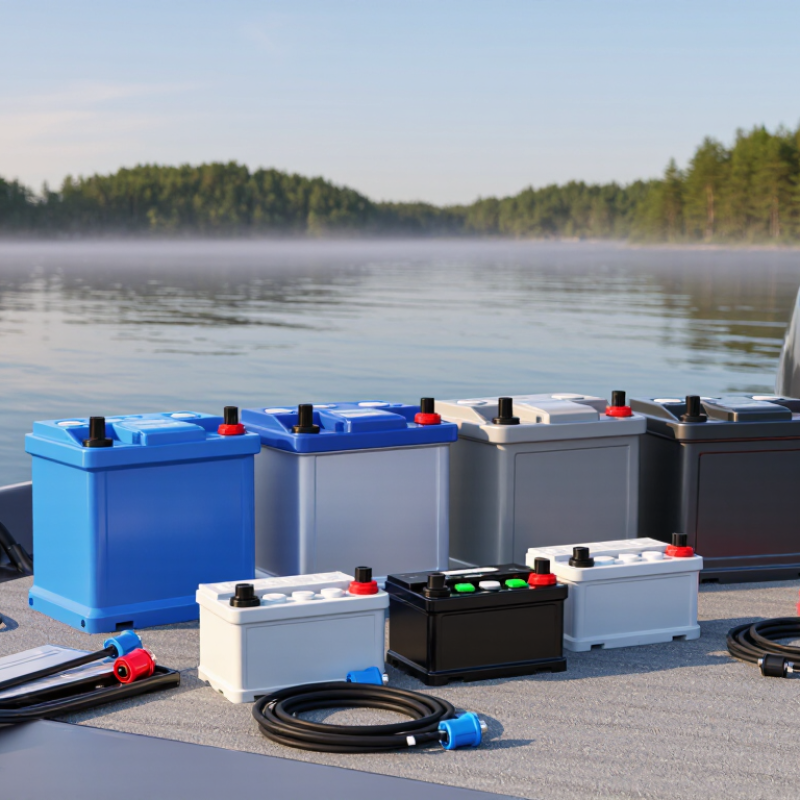
A trolling motor battery must deliver steady power over hours, tolerate repeated cycling, and fit securely in a damp, vibrating boat. Start with the motor’s voltage requirement; a mismatch can cause poor performance or equipment damage. Then estimate energy needs from expected current draw and time on the water, adding reserve for wind, current, and longer trips. Rated amp-hours help, but usable capacity varies by battery chemistry and operating conditions.
Lead-acid deep-cycle batteries are widely used, but they are heavy and generally should not be deeply discharged repeatedly. Lithium iron phosphate batteries are lighter and often provide more usable capacity, but require a compatible charger and a functioning battery management system. Check the battery’s continuous discharge rating against the motor’s demand. Also confirm dimensions, terminal position, temperature limits, and charging guidance. A neat estimate is helpful; real conditions can still surprise you.
Tips: Secure the battery so it cannot shift, keep terminals clean and protected, and follow the manufacturer’s ventilation instructions. Record trip duration and remaining charge after each outing. Those imperfect notes can reveal whether your capacity estimate needs adjustment.
Marine Trolling Motor Battery Capacity and Theoretical Runtime
The estimates use rated capacity divided by a constant 20 A draw (runtime in hours = amp-hours ÷ amps). They are theoretical, not guaranteed operating times: actual runtime varies with battery chemistry, discharge rate, temperature, motor settings, and the battery’s voltage cutoff.
Battery Technologies Used by China’s Marine Power Manufacturers
Marine power manufacturers in China commonly work with two battery chemistries: lithium iron phosphate and lead-acid. Lithium iron phosphate, often called LFP, offers lower weight and steady voltage during a long trolling session. Lead-acid options remain relevant where purchase cost matters more than weight. Neither chemistry fits every boat.
An LFP pack typically pairs cells with a battery management system. This system monitors voltage and temperature, and can interrupt charging or discharge when limits are reached. For a boat owner, that protection matters when a motor draws changing current near weed beds or in strong wind. Details count. Connectors, cable sizing, and enclosure sealing also affect safe, dependable operation. A battery may carry ample capacity on paper yet perform poorly if connections loosen under vibration.
Marine designs also account for damp compartments, temperature swings, and repeated charging. Sealed housings help resist moisture, while thermal controls can reduce charging risks in cold conditions. Still, “marine-ready” is not a complete specification. Buyers should check usable capacity, continuous discharge rating, charger compatibility, and documented protection features. The trade-off is not always neat: lighter packs can cost more, and a compact enclosure may leave less room for heat management. Product data helps, but real installation conditions deserve careful attention.
How to Evaluate Chinese Trolling Motor Battery Suppliers
Evaluating Chinese trolling motor battery suppliers takes more than comparing advertised amp-hours. Ask for cell-level traceability, a clear battery management system specification, and test results for continuous discharge, temperature, and cycle life. Check whether capacity was measured under conditions close to your use: a small fishing boat, repeated acceleration, and long periods at low speed. Numbers need context.
The International Energy Agency’s Global EV Outlook 2024 reports that electric-car battery demand reached about 750 GWh in 2023, roughly 40% above 2022. This reflects China’s substantial battery manufacturing ecosystem, but it does not establish a supplier’s marine-battery performance. Request dated test reports and confirm who performed the tests. Compare the stated cycle life with its test depth of discharge and temperature; without those details, the figure can mislead. Also inspect enclosure seals, terminal protection, warranty exclusions, and how replacement units are handled. One overlooked point: a technically strong battery may still be a poor fit if support is slow or documentation is unclear.
Tips: Ask for a sample and independently verify its usable capacity and voltage under load. Get written answers about cold-weather charging and warranty coverage before ordering. A polished datasheet is useful, but it is not proof.
Profiles of 10 Leading Marine Trolling Motor Battery Manufacturers in China
China’s marine trolling-motor battery market includes manufacturers with different strengths, from cell selection to sealed-case assembly. The profiles below describe ten supplier capability types, not an independently verified ranking. Buyers should check current specifications and test reports.
Supplier profiles
Profile 1 focuses on lithium battery packs with built-in protection systems.
Profile 2 emphasizes compact cases for small fishing boats.
Profile 3 supplies higher-capacity designs for longer outings.
Profile 4 specializes in lead-acid options, valued for familiar installation and service routines.
Profile 5 develops battery management systems that monitor temperature and charge levels.
Profile 6 offers custom terminals and cable layouts. Fit matters.
Profile 7 concentrates on vibration-resistant assembly for rough water.
Profile 8 provides private-label production and flexible order quantities.
Profile 9 highlights factory testing, including capacity checks and insulation inspection.
Profile 10 combines battery assembly with charger matching and technical support.
These differences matter more than a polished catalogue. Ask for usable capacity, weight, cycle-life test conditions, and charging limits. A stated cycle count means little without its temperature and depth-of-discharge conditions.
Request sample units and inspect terminal protection, case seals, and labels. Some suppliers may describe a design as marine-ready without explaining the test method. That deserves a follow-up. Small details matter.
Comparing Manufacturers by Products, Certifications, and Support
Compare China’s marine trolling-motor battery manufacturers by chemistry, capacity, certifications, and after-sales support. Lead-acid and lithium models differ in weight, charging needs, and usable capacity. Ask for a complete specification sheet, including continuous discharge current and recommended charger settings. A label alone proves little. Request certificate numbers and confirm they cover the exact battery model. For lithium products, check whether safety testing, battery-management protection, and salt-spray or vibration test results are documented.
The Battery Council International’s 2022 National Recycling Rate Study reported a 99% recycling rate for lead batteries in the United States. That figure is not a China-specific measure, but it highlights why manufacturers should explain take-back options and end-of-life handling. Compare warranty length, replacement-part availability, technical response times, and support in your time zone. These details matter when a battery fails far from shore. Certification claims can also be easy to misread; verify the issuing body and test scope.
Tips: Match capacity to your motor and typical trip length. Ask for a sample test report before placing a bulk order. Check terminal layout and case dimensions against your boat. A small mismatch can spoil a neat installation.