China Top 10 Self Driven Rail Cart Manufacturers?
Choosing a Self Driven Rail Cart manufacturer is not just a matter of comparing prices. A cart carrying steel coils through a workshop faces different demands from one moving parts between assembly stations. Rail gauge, payload, travel distance, duty cycle, braking, and control options all affect whether a system fits the job. Small details matter.
This guide introduces ten manufacturers in China and outlines practical points for comparing their products. It focuses on verifiable factors, such as published technical specifications, customization capabilities, manufacturing experience, and after-sales support. Buyers should ask for drawings, load calculations, operating limits, and references for comparable installations. A clear response can reveal more than a polished catalog.
There is no single best supplier for every facility. Some projects need simple push-button controls; others require coordinated transfers, charging arrangements, or integration with existing equipment. Site conditions can change the answer. Even a short rail route may have tight turns, floor constraints, or frequent loading stops.
Company information and product ranges may change over time, so confirm current details directly with each manufacturer. Treat rankings as a starting point, not a final verdict. That distinction is easy to miss. The right choice depends on the actual load, workflow, and support required after delivery. A careful comparison takes effort, and this guide cannot replace an engineering review. It can, however, help readers ask more precise questions before requesting quotations.
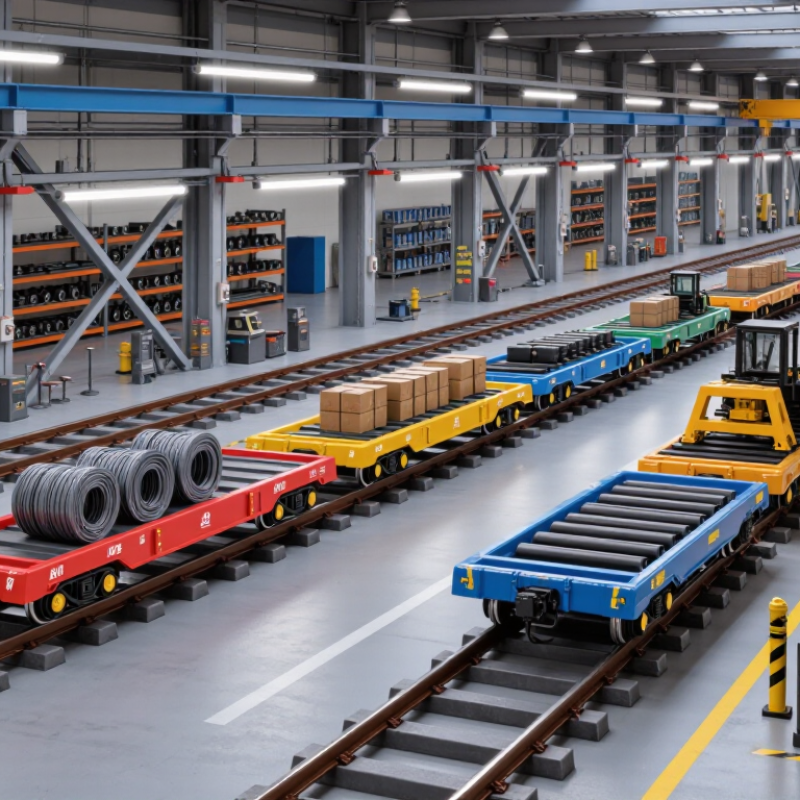
What Is a Self-Driven Rail Cart?
A self-driven rail cart is a powered carrier that moves loads along a fixed rail path with limited or no continuous human steering. Its drive unit supplies motion, while onboard controls manage speed, stopping, and travel direction. Depending on the design, guidance may come from the rails, sensors, or a combination of both. The term is not perfectly standardized, so buyers should check how each manufacturer defines “self-driven.”
Unlike a free-roaming mobile robot, a rail cart follows a set route between workstations, storage areas, or production lines. This can make travel predictable, but it also means the track layout determines where the cart can go. A typical system may include a motor, rechargeable power source, load platform, position controls, and obstacle or access sensors. Operators still need to consider payload, gradients, stopping distance, and how carts behave during faults. Small details matter.
Industry data helps explain the wider move toward automation, though it does not measure rail-cart performance directly. The International Federation of Robotics’ World Robotics 2024 report recorded 541,302 industrial robot installations worldwide in 2023. MHI’s 2024 Annual Industry Report found that 88% of surveyed organizations expected supply-chain technology investment to rise over five years. These figures show growing interest, not guaranteed savings. A rail cart may reduce repeated manual transport, but poor route planning can create congestion. That part is easy to underestimate.
How Self-Driven Rail Carts Operate
How Self-Driven Rail Carts Operate
A self-driven rail cart moves along a fixed track, carrying materials between workstations, storage areas, or production lines. Its drive motor turns rail-mounted wheels, while a controller manages speed, direction, and stopping points. Some carts draw power from the track; others use onboard batteries. At a loading bay, a sensor or control-system signal can trigger the next trip. The route is predictable. The load is not always so.
Onboard sensors, encoders, and limit switches help the cart detect position and respond to obstacles or station signals. Safety systems can slow or stop it when a person or object enters a monitored area. Operators typically set routes and dispatch rules through a control interface, then review faults and charging needs. Details vary by installation, so the rail layout, load weight, and stopping accuracy should be checked together. A cart that stops smoothly without a load may behave differently with a heavy pallet.
The wider automation context is growing: the International Federation of Robotics reported 541,302 industrial robot installations worldwide in 2023, in World Robotics 2024. That figure is not specific to rail carts, but it shows the scale of industrial automation investment.
Not magic. Rail guidance reduces route uncertainty, yet it can also limit flexibility when production layouts change. A missed sensor, worn wheel, or poorly aligned transfer point can interrupt the whole flow. That deserves regular attention.
Main Types and Industrial Applications
Self-driven rail carts move loads along fixed tracks without requiring a towing vehicle. Common types include battery-powered carts, rail-powered carts, and cable-reel models. Battery units suit routes where flexible charging is practical. Rail-powered versions can support repeated movements along established production lines. Cable-reel designs serve longer routes, though the cable needs careful management. The categories can overlap. Power source alone does not determine the best choice.
In steel plants, carts can carry slabs, coils, or heavy tools between workstations. Foundries use them to move molds and castings, where heat and dust affect equipment selection. Automotive factories often use rail carts to transfer components between assembly areas. Warehouses may use them for pallet movement on predictable routes. Smooth floors are not required. Track condition still matters.
Capacity, travel distance, loading method, and stopping accuracy should guide selection. A cart carrying a steel coil needs different deck supports from one moving boxed parts. Operators should also consider turning space, crossings, and emergency access. Some layouts look efficient on paper but create bottlenecks near shared stations. That detail is easy to miss. Regular checks of wheels, rails, sensors, and charging equipment help keep daily operations predictable.
Top 10 Self-Driven Rail Cart Manufacturers in China
China’s top ten self-driven rail cart manufacturers are best compared by engineering fit, not advertising claims. These carts move heavy loads along fixed tracks in workshops, foundries, and assembly areas. A useful comparison checks rated capacity, rail gauge, travel distance, turning layout, and daily operating hours. Small details matter. A cart that handles a smooth floor may struggle with dust, uneven joints, or frequent stops.
Reliable suppliers should provide clear layout drawings, motor and battery specifications, braking details, and practical maintenance guidance. Ask how the cart behaves on curves and what happens if a sensor detects an obstruction. These questions reveal more than a headline load rating. Factory trials and customer references can also help verify performance, though published case studies may not show every limitation. That is worth remembering. Buyers should compare service response, spare-part availability, and customization lead times alongside price. A “top ten” list can change with application needs, so the most suitable manufacturer is the one whose design matches the actual route, payload, and work cycle.
How to Compare and Select a Manufacturer
When comparing self-driven rail cart manufacturers, start with the operating conditions, not the brochure. Record the load weight, cart dimensions, rail gauge, travel distance, and number of daily cycles. Measure tight curves and floor transitions. Small details matter.
Ask for a duty-cycle estimate based on your actual route and payload. Check battery runtime, charging time, braking behavior, and how the cart responds if an obstacle blocks its path. Request drawings, electrical specifications, maintenance intervals, and a clear list of included safety features. Then review a reference installation with similar loads. A short, loaded demonstration on representative track can reveal awkward controls or poor visibility. It may not reveal everything.
Compare how each manufacturer handles customization and after-sales support. Confirm spare-part lead times, technician availability, operator training, and who manages commissioning. Ask what assumptions their quotation makes; track quality and site preparation can change the real cost. Look for documented test results rather than broad performance claims. Polished materials are useful, but not proof. I would still leave room for doubt: a factory test rarely matches every shift, route, or operator. Make the selection criteria measurable, and note any unanswered questions before approving a design.