
China Top 10 Timer Switch for Lights Manufacturers
Choosing a reliable Timer Switch For Lights can improve convenience, reduce wasted energy, and make lighting schedules easier to manage. China has a broad manufacturing base, from suppliers of compact wall timers to factories producing programmable units for commercial projects. This guide introduces ten manufacturers and explains what buyers should examine before requesting a quotation. Details matter.
A useful comparison goes beyond price and product photos. Check supported voltage, rated load, switching interval, installation method, and compatibility with LED lamps. Ask whether the timer offers a manual override, a clear display, or backup power that preserves settings during an outage. For outdoor or dusty locations, confirm the stated protection rating and the conditions behind it. Request current datasheets and sample units, then verify performance under the load and schedule your project will actually use. Fit comes first.
Manufacturers may differ in engineering support, customization options, production capacity, and quality-control procedures. Buyers should ask how products are tested, how defects are handled, and whether the supplier can provide relevant, verifiable documentation. Certifications and compliance claims should be checked against the destination market and the exact model, not assumed from a company profile. This article is a starting point, not a substitute for technical review. A timer that works well in a hallway may not suit a sign, workshop, or outdoor fixture. That takes testing. Comparing these practical details can help readers identify manufacturers worth contacting and avoid choices based on marketing language alone.
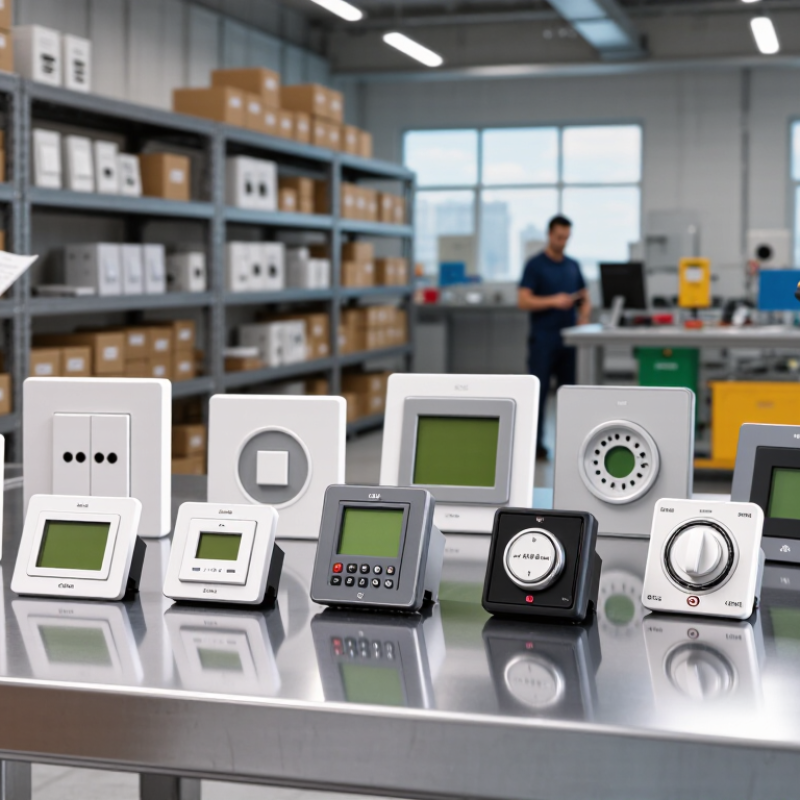
What Timer Switches for Lights Do and How They Work
A timer switch turns lights on or off at preset times, reducing the need to rely on memory. For example, a hallway light can switch off after a planned evening period, while a porch light can follow a weekday schedule. Basic models use a clock and relay; digital models store schedules and may offer manual overrides. When the scheduled time arrives, the relay opens or closes the circuit. Simple in principle.
The U.S. Department of Energy’s 2011 report, Advanced Lighting Controls, estimates that advanced lighting controls can reduce lighting energy use by 20–60%, depending on the building and control strategy. That range covers more than timer switches alone, so it should not be treated as a guaranteed saving for one device. Actual results depend on how often lights would otherwise stay on, the lamp load, and the schedule. Check the switch’s rated load and wiring requirements before installation; a schedule that ignores real household routines may simply shift wasted energy to another hour.
China Top 10 Timer Switch for Lights Manufacturers - What Timer Switches for Lights Do and How They Work
| Timer Switch Type | How It Works | Typical Lighting Use | Common Control Options | Key Selection Consideration |
|---|---|---|---|---|
| Mechanical plug-in timer | A motor-driven clock dial turns at a steady rate. Tabs or segments on the dial operate a switch at selected times. | Lamps and other plug-in lights on a repeating daily schedule. | Manual on/off control and fixed on/off periods, commonly set in short time increments. | Check the outlet type, load rating, schedule interval, and whether the timer supports the connected lamp load. |
| Digital plug-in timer | An electronic clock and programmed memory control the outlet according to stored switching times. | Table lamps, floor lamps, and seasonal lighting. | Multiple daily programs; some models offer weekday/weekend schedules, random operation, or countdown functions. | Confirm the number of programs, clock backup method, outlet compatibility, and rated load. |
| In-wall mechanical timer | A mechanical clock mechanism operates an in-wall electrical contact at preset times. | Fixed lighting circuits where a simple recurring schedule is sufficient. | Dial-based schedule with manually selected operating periods. | Installation must match the circuit, wiring, electrical box, and applicable local electrical requirements. |
| In-wall digital timer | A microcontroller keeps time and switches the connected lighting circuit according to programmed events. | Hallway, porch, and other hardwired lighting circuits. | One-time or recurring schedules; features vary by model and may include a manual override. | Check wiring requirements, neutral-wire needs, load type, and compatibility with LED or other electronic loads. |
| Astronomical timer | A clock uses a programmed date and geographic location to estimate sunrise and sunset, then switches at the selected solar event. | Outdoor, landscape, and security lighting that follows seasonal daylight changes. | Sunrise/sunset switching, adjustable offsets, and optional fixed-time limits, depending on the model. | Accurate location and date settings are important; confirm whether the timer supports the desired offset and schedule. |
| Photocell timer switch | A light sensor detects ambient brightness and switches a circuit when illumination crosses a set threshold. Some models combine this with timed shutoff. | Dusk-to-dawn outdoor lights and other lighting controlled by natural light levels. | Light-level threshold; combined models may add a timed operating period. | Sensor placement and exposure affect operation. Avoid positioning the sensor where the controlled light shines directly on it. |
| Countdown timer switch | A user starts a countdown, and an electronic or mechanical timer turns the circuit off when the selected duration ends. | Lighting that should remain on temporarily, such as utility or storage-area lights. | Preset or adjustable run times, with available intervals depending on the model. | Check the maximum countdown duration and ensure the device is rated for the lighting circuit and load. |
| Interval or cycle timer | An electronic timing circuit repeatedly switches a load on and off using configured on-time and off-time periods. | Applications needing repeated lighting cycles rather than a single daily schedule. | Adjustable on/off durations; cycle range and repeat behavior vary by model. | Verify timing range, cycle mode, switching frequency, and the load rating for the intended application. |
| DIN-rail digital timer | A programmable electronic clock controls relay contacts mounted in a distribution or control cabinet. | Scheduled lighting in commercial, industrial, and building-control installations. | Daily or weekly programs; some units provide multiple channels or holiday settings. | Check supply voltage, contact rating, number of channels, enclosure arrangement, and required wiring protections. |
| Smart network-connected timer switch | An electronic timer runs stored schedules and may also accept commands through a compatible network or control platform. | Connected home or building lighting where schedules and remote control are useful. | App-based schedules, manual control, and—in supported systems—voice or automation integration. | Confirm network requirements, platform compatibility, local-control behavior, wiring needs, and load rating. |
General product information only. Features, electrical ratings, wiring requirements, and compatibility vary by model; always check the product documentation and applicable electrical codes before installation.