Best Car Battery Purchase Guide for Optimal Performance?
When it comes to optimizing car performance, choosing the right battery is crucial. Mark Johnson, an industry expert in car batteries, emphasizes, "A reliable battery can make or break your driving experience." This statement underscores the importance of a thoughtful Car Battery Purchase.
Many car owners underestimate the variety of options available. Factors such as size, type, and power rating can significantly affect performance. It's easy to select a battery based solely on price, but this can lead to regrets. A lower-priced battery may not deliver the reliability needed for daily driving.
Investing time in research is essential. Take note of the warranty and reviews. A weak battery can leave you stranded, turning a simple trip into a nightmare. Be aware: not all batteries fit all vehicles. Ensure compatibility to avoid potential issues. Making an informed Car Battery Purchase could save you hassle and money in the long run.

Understanding Different Types of Car Batteries and Their Uses
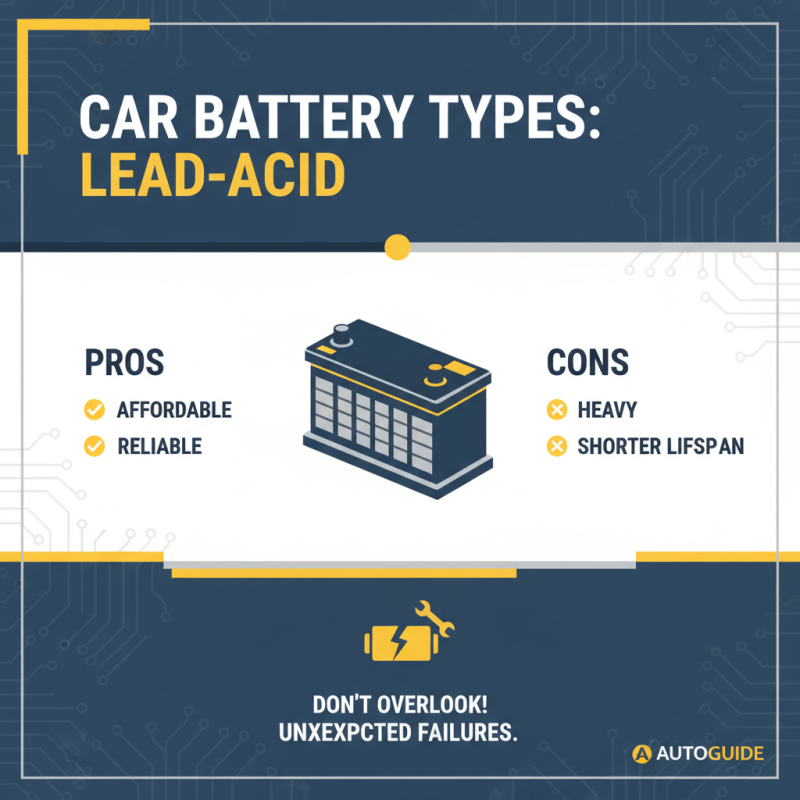
When selecting a car battery, understanding the different types available is crucial for optimal performance. Lead-acid batteries are among the most common. They’re affordable and reliable, making them a popular choice for many drivers. However, they do have limitations, including weight and a shorter lifespan. Many people overlook these factors, leading to unexpected failures.
Another option is the absorbed glass mat (AGM) battery. It offers improved performance and durability. AGM batteries are safer, thanks to their leak-proof design. Yet, they come with a higher price tag. This often leaves buyers questioning their true value. If you're using start-stop technology, AGM may be the better choice. But, don't rush into it without considering your individual needs.
Lithium-ion batteries represent a newer technology that promises lighter weight and longer lifespan. They work well in electric vehicles and hybrids. Nonetheless, their high cost can be a hurdle for many. Before making a choice, consider your driving habits. Assess the climate conditions where you live. Each battery type has its strengths and weaknesses. A thoughtful evaluation of these will lead to a more informed purchase.
Factors to Consider When Choosing a Car Battery
Choosing the right car battery enhances performance and longevity. There are several factors to consider, each playing a crucial role in your decision. The battery type is essential. Lead-acid batteries are common, but lithium-ion options are gaining popularity. Research shows that lithium-ion batteries can have a longer lifespan, lasting up to 10 years compared to traditional types, which usually last 3 to 5 years.
Capacity is another critical aspect. Look for the cold cranking amps (CCA) rating. A higher CCA offers better performance in colder climates, ensuring your engine starts smoothly. A study indicates that a CCA of 600 or more is often ideal for many vehicles. The size and fit also matter. Ensure the battery fits snugly in your car’s battery tray. A loose battery can vibrate and cause internal damage over time.
Lastly, consider your driving habits. For frequent short trips, a battery with a good reserve capacity is essential. Many drivers overlook this detail. A battery with insufficient reserve capacity may not perform well. Keep in mind that maintenance, such as checking terminals for corrosion, can extend battery life. Being attentive to these factors can lead to optimal performance and fuel efficiency.
Best Car Battery Purchase Guide for Optimal Performance
| Factor |
Description |
Importance Level |
| Battery Type |
Choosing between lead-acid or AGM options based on vehicle requirements. |
High |
| Cold Cranking Amps (CCA) |
Affects the battery's ability to start in cold temperatures. |
High |
| Reserve Capacity (RC) |
Indicates how long the battery can run on its own power. |
Medium |
| Warranty |
Longer warranties often suggest better quality and reliability. |
Medium |
| Size and Fit |
Ensures the battery fits securely in the vehicle's battery tray. |
High |
| Price |
Consideration of cost vs features and specifications for performance. |
Medium |
| Maintenance Requirements |
Some batteries require more upkeep than others. |
Low |
How to Determine the Right Size and Specifications for Your Vehicle
When selecting a car battery, size and specifications matter significantly. Each vehicle has unique requirements. To ensure optimal performance, you need to understand these factors. Firstly, refer to your owner’s manual. This document provides essential information about battery group size and specifications. Ignoring this step can lead to poor performance.
Choosing the right size is crucial. A battery that is too small may not provide enough power. Conversely, a battery that is too large can lead to improper fit. A snug fit is essential to prevent vibrations that can damage the battery. Check the dimensions carefully. Measure if necessary.
Tips: Always consider the cold cranking amps (CCA). A higher CCA ensures better starting in cold weather. Also, look for a warranty. A good warranty reflects quality. Remember, installation can also be a challenge. Ensure you have the right tools. Sometimes, even if a battery fits, it may not perform well. This is often overlooked. Avoid making assumptions!
Lastly, don't rush your decision. Take your time to research various options. Compare specifications and prices. This will help you make a well-informed choice. Your vehicle deserves the best.
Top Brands and Models of Car Batteries for Price and Performance
When selecting a car battery, performance and price are key considerations. Different models cater to varied needs. Some batteries excel in cold cranking amps, ideal for colder climates. Others focus on deep cycle capabilities, great for vehicles used for short trips. Make sure to assess your driving habits. Sometimes, a high-performance battery may not be necessary.
Many popular options provide great value. A high-capacity model could be overkill for everyday driving. Meanwhile, budget-friendly choices might lack the longevity you seek. It’s essential to balance your budget with your vehicle’s requirements. Always consider safety features. Some models include design elements that prevent leaks and spills, improving reliability.
Options vary significantly in terms of warranty and lifespan. A longer warranty may suggest better durability. However, not all high-priced batteries guarantee optimal performance; some may falter early. That’s where research becomes crucial. User reviews can offer insights, revealing common issues that manufacturer specs might not cover. Test reports from auto experts can also guide smoother decision-making.
Best Car Battery Performance Comparison
This chart compares various car batteries based on their capacity (Ah) and cold cranking amps (CCA). The data helps illustrate which batteries offer the best performance for different car needs.
Tips for Proper Installation and Maintenance of Car Batteries
Proper installation and maintenance of car batteries can significantly enhance their performance. Before you install your new battery, ensure that the terminals and connections are clean. Use a wire brush if necessary. It’s a simple step but often overlooked. A dirty connection can lead to weak performance. When connecting the battery, make sure you follow the correct order: positive first, then negative. This can prevent a short circuit.
Regular maintenance is just as important. Check the battery regularly for any signs of corrosion. Corrosion can appear as a white, powdery substance around the terminals. If you notice it, clean it with a mixture of baking soda and water. It’s a quick fix that prevents further issues. Additionally, ensure the battery is secured tightly. A loose battery can move around and damage the vehicle.
Temperature extremes can also affect your battery. In cold weather, battery performance declines. Consider using a battery blanket for those frigid nights. In hot climates, check the fluid level monthly. Distilled water can be added if necessary. Remember, batteries don’t last forever. Reflect on how long you’ve had yours and consider replacement if it shows signs of aging. Regular checks may require effort, but they pay off in consistent performance.