
China Best Smart Locker Lock Suppliers?
Choosing a Smart Locker Lock supplier in China requires more than comparing product photos and unit prices. The right partner should understand how lockers are used, where they are installed, and who maintains them. A lock for a staff changing room may need different access controls from one used in a school, gym, or parcel area. Small details matter.
Check how the lock handles everyday use. Can users open it with a PIN, RFID card, fingerprint, or mobile credential? What happens when the battery runs low or a network connection drops? Ask for clear answers, not just a feature list. Door thickness, latch direction, mounting space, and power access can affect installation. A sample fitted to your actual locker door is often more useful than a polished catalog image.
Supplier evaluation should also include manufacturing experience, quality checks, customization capability, and support after delivery. Request technical drawings, test information, warranty terms, and references where available. Verify any stated certifications for the exact product and market; do not assume every model shares the same approvals. Details vary. A low quote can look attractive, yet unclear spare-part access or slow technical support may create costs later. No supplier is best for every project. The useful question is which supplier can document its claims, respond clearly, and match your operating needs. A careful comparison takes time, and I would still leave room for a pilot order before committing to a large rollout.
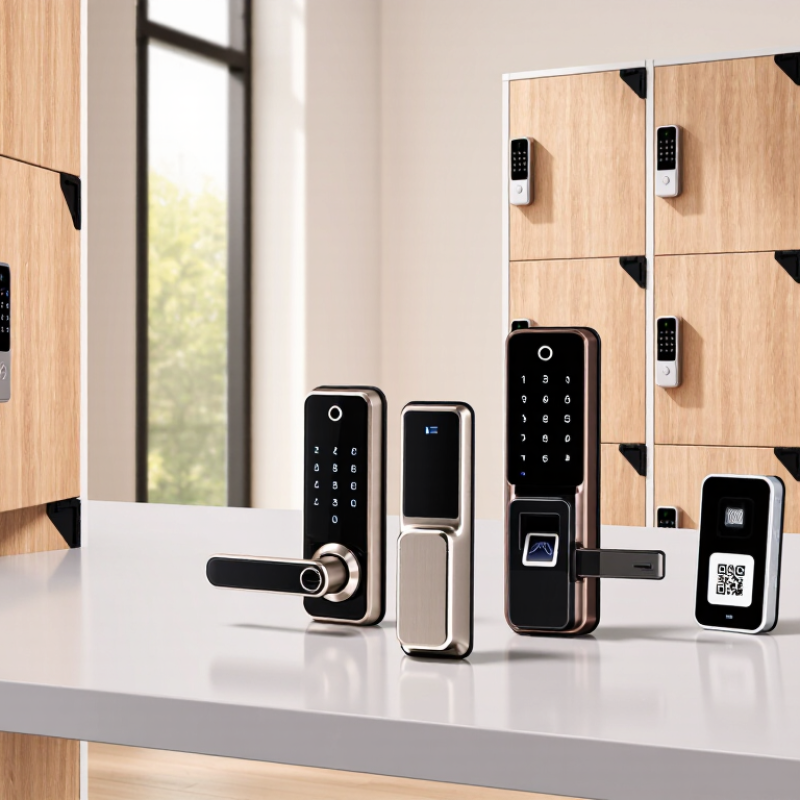
Define Smart Locker Locks and Compare RFID, BLE, PIN, and Biometric Access
A smart locker lock controls access to an individual compartment and records or verifies a user’s entry. Unlike a simple mechanical latch, it combines a locking mechanism with an access method and power source. For buyers comparing suppliers in China, the lock’s fit, emergency access, and service life matter as much as its advertised features. Small details matter.
RFID uses a card or tag tapped near a reader. It is quick for shared facilities, though lost cards need prompt deactivation. BLE lets an authorized phone communicate with the lock, often without touching it. Check how it behaves when a phone battery dies or connectivity is weak. PIN entry avoids cards and phones, but codes can be observed or shared. Biometric access, such as fingerprint reading, reduces dependence on tokens, yet damp or dusty fingers may cause failed reads. None is perfect.
When comparing suppliers, ask for cycle-test results, battery-life conditions, credential management details, and clear instructions for power failure. Test the lock on the actual locker door; metal thickness and alignment can change performance. A phone may unlock smoothly in a showroom, then struggle in a crowded corridor. That gap is easy to overlook. Also confirm whether the supplier can provide replacement parts and consistent technical support over time.
China Best Smart Locker Lock Suppliers? — Define Smart Locker Locks and Compare RFID, BLE, PIN, and Biometric Access
What is a smart locker lock? It is an electronically controlled locking device that grants or denies access using a credential—such as a card, smartphone, PIN, or biometric—and may record events or connect to a management system. Features, security, and offline behavior vary by lock and system configuration.
| Access method | How access works | Typical credential | Practical advantages | Limitations and operational factors | Security and privacy considerations | Common use cases |
|---|---|---|---|---|---|---|
| RFID | A reader detects a compatible card, key fob, or other RFID credential presented near the locker. | Staff ID card, contactless card, or assigned key fob. Reader frequency and credential type must be compatible. | Quick, convenient operation; users do not need to remember a code or carry a charged phone. | Credentials can be lost, forgotten, or shared. The system needs compatible readers and credential management; read range depends on the technology and setup. | Security depends on the credential and system. Some older or basic card technologies offer weaker protection than modern cryptographic credentials. Lost credentials should be promptly disabled. | Workplaces, schools, gyms, and facilities where users already carry access cards. |
| BLE | A Bluetooth Low Energy-enabled phone or device communicates with the lock, usually through an authorized app or digital credential. | Smartphone-based credential, often managed through an app or access platform. | Can support digital credential issuance and revocation without handing out physical cards; useful for app-based or remote-managed systems. | Access can depend on phone availability, battery charge, Bluetooth settings, app setup, and the lock's authentication workflow. Phone compatibility should be checked. | Use authenticated, encrypted communication and secure credential management. System design should consider unauthorized sharing and relay-related risks. | Shared workplaces, package rooms, campuses, and facilities using mobile access credentials. |
| PIN | The user enters a numeric code on a keypad or touchscreen to unlock the assigned compartment. | Personal, temporary, or shared numeric code, depending on the system. | No card or phone is required. Codes can be convenient for short-term access and visitor workflows. | Users may forget or disclose codes. Keypads require regular maintenance and may be affected by wear, dirt, or environmental conditions. | Avoid predictable or reused codes; limit shared-code use where individual accountability is needed. Systems may support code expiry, attempt limits, and event logs. | Short-term storage, visitor access, parcel collection, and sites where carrying a credential is inconvenient. |
| Biometric | A sensor compares a presented biometric, commonly a fingerprint, with an enrolled user template before granting access. | Enrolled fingerprint or another biometric supported by the specific system. | Users do not need to carry a card or remember a PIN. It can link access to an enrolled individual. | Sensor performance can vary with placement, cleanliness, finger condition, and environmental factors. Enrollment and a fallback access method may be needed. | Biometric data is sensitive and cannot be changed like a PIN if compromised. Prefer systems with clear data-handling practices and protected template storage; follow applicable privacy requirements. | Controlled-access areas where individual verification is required and biometric use is appropriate. |
Selection note: Compare the lock's credential support, offline operation, emergency access, event logging, power requirements, installation dimensions, and management features. The table describes typical characteristics; actual performance and security depend on the complete lock and access-control system.