What Is the Best Deep Cycle Boat Battery?

Choosing the best Deep Cycle Boat Battery is less about a familiar brand and more about matching chemistry, capacity, and charging equipment to real onboard use. A weekend angler running a fish finder and lights has different needs from a cruiser powering refrigeration overnight. Start with the load. Then consider available charging time, space, weight, and budget.

Marine-electrical author Nigel Calder’s guidance emphasizes sizing a battery bank around actual energy use and the limits of its charging system. That practical principle helps prevent a common mismatch: buying ample amp-hour capacity without checking whether the alternator, charger, and wiring can support it. Battery labels also need careful reading. Amp-hours indicate capacity under stated test conditions; reserve capacity and cold-cranking amps describe different performance measures. They are not interchangeable.

The Battery Council International’s 2023 National Recycling Rate Study reported that more than 99% of lead batteries in the United States are recycled. That figure describes recycling, not battery life or boating performance. Still, it offers useful context when comparing lead-acid options with lithium batteries. Look beyond headline claims. Compare usable capacity, cycle-life test conditions, warranty terms, and manufacturer charging specifications. A battery that looks impressive on a store shelf may not suit a damp, vibrating boat or a short charging window. Small details matter. This guide examines those trade-offs so boat owners can choose a Deep Cycle Boat Battery based on evidence, not a single rating or sales pitch.
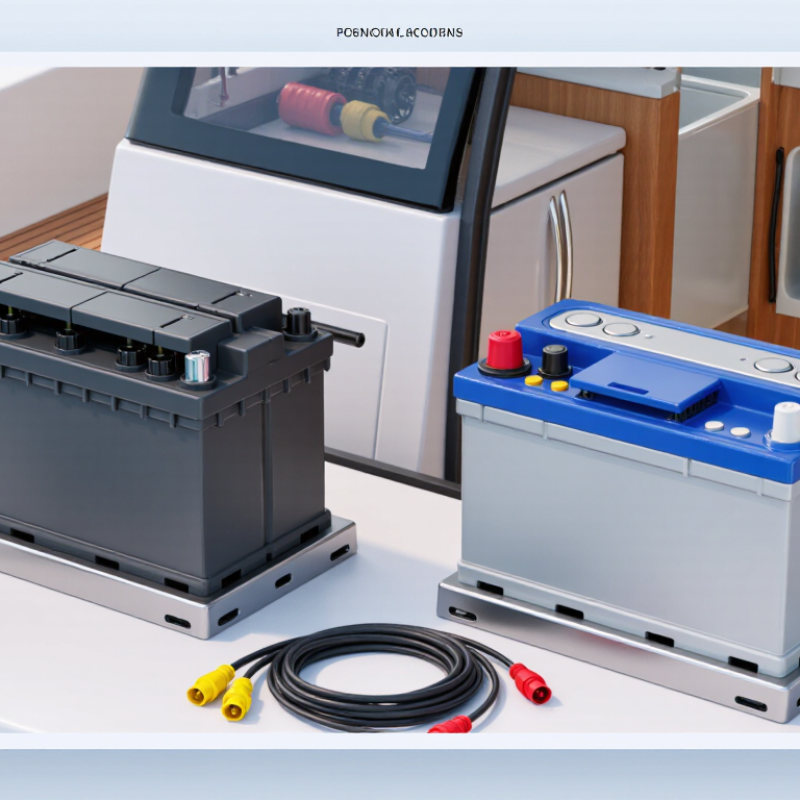
What Is the Best Deep Cycle Boat Battery?

How Deep-Cycle Boat Batteries Store and Deliver Power

A deep-cycle boat battery stores energy chemically, then releases it as current when onboard equipment needs power. In a lead-acid battery, discharge converts active material on both plates into lead sulfate. Recharging reverses that reaction. A 12-volt lead-acid battery contains six cells, each producing about 2 volts. The U.S. Department of Energy and EPRI’s Electricity Storage Handbook reports typical lead-acid round-trip efficiency of roughly 70–80 percent. Some energy becomes heat. That matters when a refrigerator hums overnight and the battery must still crank the engine at dawn.

Capacity ratings need context. Battery Council International technical guidance commonly uses a 20-hour discharge rate for comparing lead-acid capacity. A battery rated at 100 amp-hours may therefore deliver 5 amps for 20 hours under specified test conditions—not 100 amps for an hour. Real results vary with temperature, battery age, and load. High current can reduce usable capacity. Still, the neat numbers can mislead. A chart cannot fully predict a rough, cold weekend on the water. For lithium iron phosphate batteries, four cells typically form a nominal 12.8-volt system; their voltage stays steadier through much of discharge. Check the battery’s chemistry, discharge limits, and charging requirements against the boat’s actual loads. A little margin helps.

Which Battery Chemistries Are Used for Marine Deep-Cycle Service?

What Is the Best Deep Cycle Boat Battery?

Which Battery Chemistries Are Used for Marine Deep-Cycle Service?

Marine deep-cycle batteries commonly use flooded lead-acid, absorbed glass mat (AGM), gel, or lithium iron phosphate chemistry. Flooded batteries are often less expensive, but need upright installation, ventilation, and periodic water checks. AGM batteries are sealed and resist vibration, which can help when a boat crosses choppy water. Gel batteries also resist spills, but require compatible charging settings. Lithium iron phosphate batteries are lighter and can deliver more usable capacity, though they usually cost more and need a suitable battery management system. Each chemistry has trade-offs. There is no universal winner.

Tips: Check the charger settings before changing battery chemistry. Compare usable capacity, not just the amp-hour label. Leave room for secure mounting and inspect terminals for corrosion.

For a small fishing boat with a modest electrical load, a well-maintained lead-acid battery may be entirely adequate. A boat running a refrigerator, navigation electronics, and lights for long periods may benefit from lithium’s lower weight and deeper usable capacity. Still, real-world performance depends on temperature, charging habits, battery age, and installation. I would not choose by chemistry alone; that shortcut can miss an undersized cable or an incompatible charger. Measure the space, estimate daily power use, and check the battery maker’s charging guidance before buying.

What Is the Best Deep-Cycle Boat Battery?

Typical Usable Capacity by Marine Battery Chemistry

Flooded lead-acid, AGM, and gel batteries are commonly used for marine deep-cycle service. Lithium iron phosphate (LiFePO₄) batteries are another option and are often designed to provide a greater usable share of their rated capacity. These figures are approximate guidance, not universal limits; follow the battery manufacturer’s recommendations and account for your boat’s charging system and operating needs.

What Features Determine the Best Battery for a Boat?

The best deep-cycle boat battery matches the real load, trip length, and charging system—not just a large amp-hour label. List the draw from your trolling motor, fish finder, lights, and radio, then estimate hours of use. For example, a 5-amp load running for 8 hours uses about 40 amp-hours, before losses and reserve. Keep a margin. You may need more than the estimate suggests.

Compare usable capacity, reserve capacity, cycle life, weight, and charging limits. SAE J537 defines reserve capacity through a 25-amp discharge test to 10.5 volts; check test conditions when comparing ratings. A 100-Ah label alone can mislead, since usable energy depends on chemistry and the battery maker’s discharge limits. Not just amp-hours. Check that the charger matches the battery chemistry, and confirm the battery fits its compartment and can be secured against pounding waves. That matters offshore.

Lithium batteries can offer lower weight and more usable capacity, but require compatible charging and battery-management protection. Lead-acid batteries are heavier and need careful charging and maintenance. The Battery Council International reports that nearly 99% of lead batteries in the United States are recycled, a useful end-of-life consideration. On the water, terminals should stay dry and tight. I would also leave room for an imperfect day: colder weather, longer runs, or an unexpected delay can drain a bank faster than planned. A loose connection can undo a good capacity choice.

How to Match Battery Capacity to Your Vessel’s Power Needs

A deep-cycle boat battery should be sized from the equipment you use, not the vessel’s length. List each load, its current draw, and daily operating hours. A chartplotter drawing 2 amps for 8 hours uses 16 amp-hours; three 1-amp lights running 4 hours use another 12. Add the figures, then allow capacity for pumps, instruments, and unexpected delays. Small loads add up.

Check how the battery’s capacity was measured. IEC 60095-1:2018 describes capacity testing under specified discharge conditions; a 100Ah rating is not a promise of 100Ah in every situation. For a simple planning example, a 12-volt, 100Ah battery stores about 1,200Wh nominally. If you limit a lead-acid battery to roughly 50% discharge, plan around 600Wh before allowing for losses, temperature, age, or heavy loads. A 10-amp average draw could therefore exhaust that usable allowance in about five hours. That estimate is imperfect. Real conditions are messier. Check the maker’s discharge guidance and your vessel’s actual load readings, then add a reserve for a long return trip.

How to Compare and Maintain Deep-Cycle Boat Batteries

Choosing a deep-cycle boat battery starts with the load, not the chemistry label. Add the amp-hours used by your electronics, lights, and refrigerator during a typical trip. Then compare usable capacity, weight, charging limits, and cycle-life conditions on each specification sheet. A 100 Ah rating does not always mean 100 Ah is practical: lead-acid batteries are commonly limited to about 50% discharge for routine use, while lithium batteries often allow deeper discharge. Check the maker’s stated test conditions; cycle-life figures are not directly comparable otherwise. The U.S. Department of Energy’s battery-testing guidance measures capacity under defined conditions, a useful reminder that ratings need context. Small details matter.

Maintenance depends on chemistry. Keep terminals clean and tight, secure the case against movement, and inspect cables for heat damage or corrosion. For flooded lead-acid batteries, check electrolyte levels and use only distilled water when needed; never open sealed batteries. Use a charger profile approved for the battery type, and avoid leaving a battery discharged. Temperature matters, too: charging limits can change in cold conditions, especially for lithium batteries. The U.S. EPA reports that more than 99% of lead-acid batteries are recycled in the United States, but correct handling still matters. A capacity test before a long trip is sensible; voltage alone can give a misleading picture.

What Is the Best Deep Cycle Boat Battery? - How to Compare and Maintain Deep-Cycle Boat Batteries

Comparison Factor Flooded Lead-Acid AGM Lead-Acid LiFePO₄ (Lithium Iron Phosphate)
Typical 12 V Capacity Commonly available in deep-cycle sizes, including 50–200 Ah. Commonly available in deep-cycle sizes, including 50–200 Ah. Commonly available in deep-cycle sizes, including 50–200 Ah.
Practical Usable Capacity Plan to use about 50% of rated capacity to help limit wear. Plan to use about 50% of rated capacity for a conservative service-life target. Often supports about 80–100% of rated capacity, subject to the battery’s specifications and BMS limits.
Approximate Weight at 100 Ah About 55–65 lb (25–30 kg). About 60–70 lb (27–32 kg). About 22–30 lb (10–14 kg).
Typical Cycle-Life Range Approximately 300–500 cycles at around 50% depth of discharge. Approximately 400–700 cycles at around 50% depth of discharge. Approximately 2,000–5,000 cycles at the depth of discharge stated for the particular battery.
Routine Maintenance Keep terminals clean and connections tight. Check electrolyte levels regularly and top up with distilled water when required. Keep upright and ventilated. Keep terminals clean and connections tight. Sealed construction means no routine water topping-up is required. Keep terminals clean and connections tight. No electrolyte checks or water topping-up; use a compatible charger and follow BMS guidance.
Charging Considerations Use a lead-acid profile. Avoid leaving the battery discharged; periodic full charging helps limit sulfation. Use an AGM-compatible lead-acid profile. Avoid excessive charging voltage and prolonged undercharging. Use a LiFePO₄-compatible charger. Many models must not be charged below 32°F (0°C) unless specifically designed with low-temperature protection.
Best Suited To Budget-conscious installations where weight, ventilation, and regular maintenance are manageable. Boats needing a sealed, maintenance-free lead-acid option and better resistance to vibration than many flooded batteries. Boats prioritizing lower weight, greater usable capacity, and long cycle life, with a higher initial purchase cost.

How to compare: Match the battery’s usable amp-hours to your estimated daily load, then check system voltage, charging equipment, available space, and the battery manufacturer’s installation limits. Cycle life, weight, and usable capacity vary by model, temperature, charging practice, and depth of discharge; the ranges above are general estimates, not guarantees.

Go to Top