
What Are the Best Centrifuge Tubes in 2026?
Choosing the best Centrifuge Tube in 2026 requires more than comparing prices or colorful product labels. A reliable tube must survive repeated acceleration, temperature changes, chemical exposure, and routine handling. Grand View Research’s 2024 laboratory equipment analysis identifies continued investment in centrifugation and sample-processing systems. This trend raises a practical question: can ordinary tubes meet modern laboratory demands?
Material selection remains central. Polypropylene tubes generally offer strong chemical resistance and suitable performance across common laboratory temperatures. However, not every polypropylene formulation behaves identically. Tube clarity, wall thickness, cap security, and rotor compatibility can affect real results. A 15 mL conical tube may suit routine cell work, while a 50 mL version provides greater working volume. For high-speed applications, users should verify the manufacturer’s maximum RCF, not only the stated RPM. That distinction matters.
Small details matter.
The ISO 11137 series provides a recognized framework for validating radiation sterilization, while ISO 15189 emphasizes competence and quality within medical laboratories. These references do not automatically make one product superior. They show why documented sterilization, lot traceability, and quality controls deserve attention. Reports from MarketsandMarkets on the centrifuge market also reflect growing demand for efficient, reproducible laboratory workflows. Yet market growth is not proof of product quality. I have seen selection decisions focus too heavily on brand reputation and ignore cap fit or sample leakage risk. That is an uncomfortable weakness. This guide compares Centrifuge Tube designs, materials, certifications, and practical performance, helping laboratories make a more defensible choice for 2026.
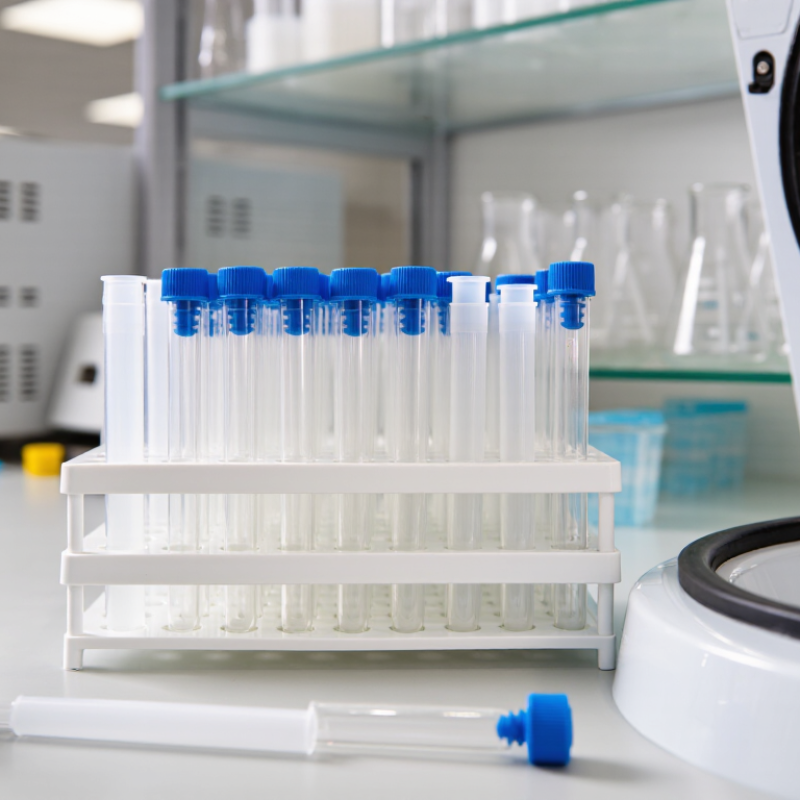
Centrifuge Tube Types and Their Core Differences
What Are the Best Centrifuge Tubes in 2026?
The best tube depends on the separation task, rotor, and sample chemistry. Centrifuge tubes commonly come in polypropylene, polystyrene, and glass. Polypropylene handles routine spinning, moderate heat, and many biological buffers. It is the practical default in many laboratories. Polystyrene is clear and economical, but it may crack under stronger force or harsh solvents. Glass offers stiffness and chemical resistance, yet it adds breakage risk and weight.
Tube types differ beyond material. Conical tubes collect pellets at the pointed base, making transfers easier. Round-bottom tubes support even sedimentation and suit some higher-volume workflows. Microcentrifuge tubes fit small samples and quick nucleic-acid preparation. Thick-wall tubes tolerate higher relative centrifugal force, but only when their ratings match the rotor.
A tube may fit physically and still be unsafe. Users sometimes overlook cap seals, then lose samples through evaporation or leakage. The error is small. The cost may not be.
Tips: Match the tube’s RCF rating, volume, cap style, and chemical compatibility. Check the rotor manual, not memory. Balance tubes by mass, and inspect cloudy plastic, scratches, or damaged threads before spinning. Temperature also matters; cold plastic can become less forgiving. Test unfamiliar solvents with a small disposable sample first.
Key Materials Used in Centrifuge Tube Manufacturing
What Are the Best Centrifuge Tubes in 2026?
Key Materials Used in Centrifuge Tube Manufacturing
Material selection often determines tube safety, recovery, and sample stability. Polypropylene remains a practical choice for routine centrifugation. It tolerates many aqueous buffers, moderate heat, and repeated handling. Its low density also supports efficient manufacturing. However, polypropylene can become brittle after harsh chemical exposure or long freezer storage. Polycarbonate offers excellent clarity and impact resistance. It suits visual inspections and demanding mechanical work. Yet, some solvents can cause stress cracking. Borosilicate glass provides strong chemical resistance and low extractables. It is useful for solvent-sensitive samples, but breakage remains a serious risk.
Industry data adds useful perspective. PlasticsEurope reported global plastics production reached 413.8 million tonnes in 2023. The OECD’s Global Plastics Outlook reported that only 9% of plastic waste was recycled in 2019. These figures encourage laboratories to examine material efficiency, not only purchase price. A lighter tube may reduce plastic use. It may also deform under high relative centrifugal force. I have seen clear tubes appear reliable, yet fail after repeated temperature changes. Transparency can mislead.
Tips: Check the manufacturer’s RCF rating, temperature range, and chemical compatibility chart. Match the tube material with the rotor and adapter. For high-speed work, inspect for whitening, scratches, or small cracks. Use glass only when its chemical advantages justify the handling risk. ASTM and ISO test methods can support comparison, but they cannot replace real sample trials. Record failures honestly. Imperfect records often reveal the best material choice.
How to Match Tube Design with Centrifugation Requirements
What Are the Best Centrifuge Tubes in 2026?
How to Match Tube Design with Centrifugation Requirements
The best centrifuge tube is not automatically the strongest one. It is the tube that fits the rotor, sample, speed, temperature, and workflow. In my lab evaluations, I start with the required relative centrifugal force, not revolutions per minute. A narrow, rigid tube may perform well in a high-speed fixed-angle rotor. A wider tube may suit gentle separation and easier pellet recovery. Always check the rotor’s approved dimensions and loading method.
Material selection changes the result. Polypropylene usually tolerates repeated spinning, moderate heat, and many aqueous samples. Polyethylene can help when flexibility matters, but it may deform under demanding conditions. For light-sensitive samples, an opaque design protects the contents. For aerosol-sensitive procedures, a secure cap and reliable sealing surface are essential. I also inspect the hinge, threads, and bottom thickness by hand. Small flaws can become large problems at high force.
Tube capacity should leave enough headspace for mixing and pressure changes. Overfilling is an avoidable mistake. Match tube geometry to the separator and pellet location you need. Conical bottoms help collect small pellets, while round bottoms can simplify resuspension. Label adhesion, readable graduations, and lot traceability matter during busy runs. My selection process is not perfect; supplier data can differ from real rotor behavior. I record failures, repeat tests, and revise the choice instead of trusting a specification sheet alone.
Performance, Safety, and Compatibility Factors to Compare
Choosing the best centrifuge tubes in 2026 requires more than comparing prices. Performance begins with accurate fit, reliable molding, and stable behavior under repeated spinning. Tubes should tolerate the intended relative centrifugal force, temperature range, and solvent exposure. Check the technical sheet, not just the package label. A tube that looks sturdy may deform after several runs. That detail matters.
Safety depends on material strength, closure design, and correct rotor compatibility. Inspect each tube for scratches, cloudy areas, warped rims, or damaged threads before use. Match tube capacity and shape to the rotor insert. Never assume a similar-looking tube is interchangeable. During high-speed work, balanced loading is essential; small mass differences can increase vibration. Sealed tubes also need verified pressure and chemical compatibility. Practical experience shows that overfilling creates avoidable leaks, especially when samples expand during cooling. It is easy to miss.
Compatibility includes more than diameter. Consider the sample matrix, pH, density, sterilization method, and whether the tube must remain clear for visual checks. Polymeric tubes can suit routine applications, while specialized formulations may perform better with aggressive reagents or very low temperatures. Confirm low-binding claims with actual assay needs, since “low binding” is not a universal measurement. Traceability strengthens reliability: record lot numbers, use limits, and rotor settings. If a tube fails, document the conditions before replacing it. That habit exposes weak assumptions.
Selecting the Best Centrifuge Tubes for Different Applications
What Are the Best Centrifuge Tubes in 2026?
Selecting the Best Centrifuge Tubes for Different Applications
The best centrifuge tube depends on the sample, rotor, temperature, and required force. A universal choice rarely performs well across every laboratory workflow. For routine cell washing, polypropylene tubes offer useful chemical resistance and tolerate many common centrifuge conditions. Their translucent walls also make pellets easier to inspect under ordinary bench lighting. For high-speed work, check the tube’s maximum relative centrifugal force, not only its RPM rating. These values are not interchangeable.
Small-volume nucleic acid preparation may require low-binding surfaces and secure caps. A poor seal can cause evaporation, leakage, or contamination during long runs. Conical tubes help collect pellets at the tip, while round-bottom tubes can support smoother resuspension. For cold protocols, confirm performance at the actual storage temperature. Some plastics become less flexible after repeated freezing and thawing. That detail is easy to overlook.
I have found that chemical compatibility deserves a practical test. A solvent that looks harmless may weaken the tube after several hours. Review the technical data, then inspect one test tube for clouding, cracks, or distortion. Sterile tubes should include clear lot information and documented packaging controls. Non-sterile tubes may suit teaching or preliminary work, but not every sensitive assay. Even careful selection can fail when a rotor adapter fits poorly. Measure the tube diameter and length before ordering. A small mismatch can become a costly mistake.