
Top Beacon Light With Siren Manufacturers in China

A Beacon Light With Siren combines a visible warning with an audible signal. In factories, warehouses, and loading areas, that pairing can help draw attention to a hazard or changing equipment status. The need for clear workplace warnings is not abstract. The U.S. Bureau of Labor Statistics reported 2.6 million nonfatal workplace injuries and illnesses among private-industry employees in 2023. Its National Census of Fatal Occupational Injuries recorded 5,283 fatal work injuries that year. These figures do not measure beacon demand, and they cannot show that one device prevents an incident. They do, however, offer useful safety context.

Choosing a manufacturer takes more than comparing lens colors or siren volume. Buyers should examine light output, sound patterns, voltage options, enclosure materials, mounting methods, and available test documentation. Ask how products perform in noisy rooms, dusty workshops, or bright outdoor locations. Request clear specifications and sample test records. A loud siren can still be poorly placed. No catalog answers every installation question.

This guide introduces leading Beacon Light With Siren manufacturers in China and the details worth checking before contacting suppliers. Company capabilities, product ranges, quality controls, and export experience can vary. Treat published specifications as a starting point, not a complete evaluation. The BLS reports describe U.S. workplaces, not Chinese factories or product performance. That limitation matters. Compare supplier claims with your site conditions, and confirm technical details directly before selecting a unit.
Top Beacon Light With Siren Manufacturers in China

Beacon Lights with Sirens: Functions, Signal Types, and Key Components

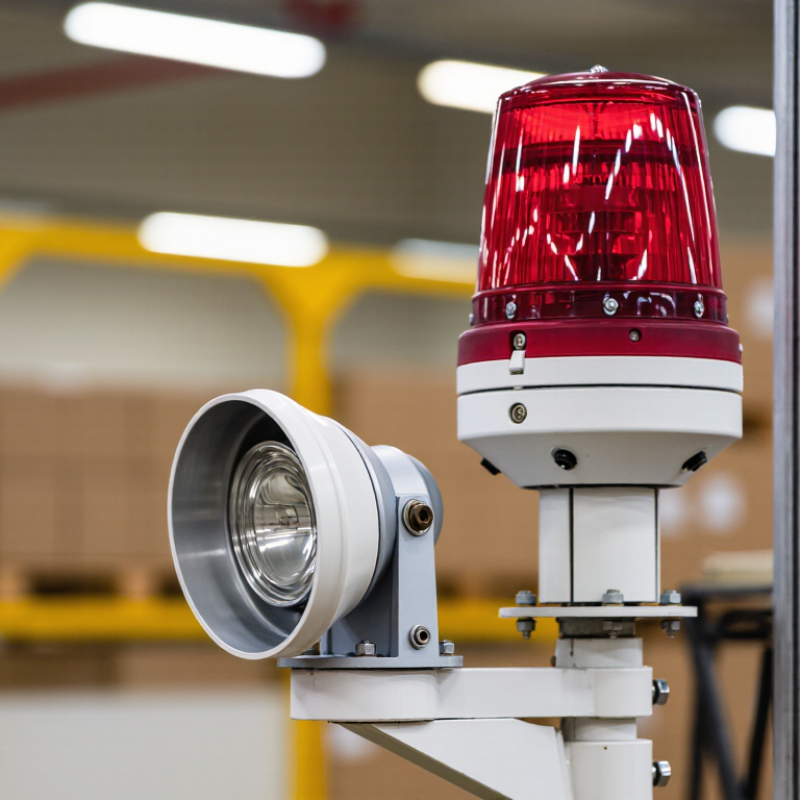
Beacon lights with sirens combine a visual warning and an audible alert in one unit. A typical assembly contains an LED or lamp, electronic driver, sounder, control circuit, wiring terminals, and a weather-resistant housing. The beacon may glow steadily or flash; the siren may use a continuous tone, pulses, or a selectable pattern. Color and sound should match a clearly documented site meaning, not guesswork. On a noisy shop floor, a red flash can remain visible when a short tone is masked by machinery. Still, louder does not always mean clearer.

Selection depends on viewing distance, ambient noise, mounting height, and exposure time. NIOSH’s 1998 Criteria for a Recommended Standard sets an 85 dBA recommended exposure limit for an eight-hour workday, using a 3 dB exchange rate. That is a worker-exposure guideline, not an alarm-volume target. Measure sound where people actually work, and check whether nearby equipment masks the alert. One detail is easy to miss: a flashing pattern can be overlooked when a worker faces away. Test both signals during realistic operating conditions, and document what each tone and color means. Specifications can look precise on paper; real rooms are less tidy.

Core Specifications: Sound Pressure in dB(A) at 1 m, Flash Rate, and Voltage

When comparing beacon lights with sirens from Chinese manufacturers, start with sound pressure stated in dB(A) at 1 m. This distance provides a useful baseline, but only when test conditions are clear. Ask whether the figure describes peak or steady output, and whether testing took place in open space. A reading taken in a reflective workshop can mislead. Small detail, big difference.

Flash rate should be listed in flashes per minute, not simply called “high visibility.” Rates around 60 to 120 flashes per minute appear in many warning applications, but the right choice depends on viewing distance and ambient light. A slower pattern may stand out near moving equipment. A faster one can blur at a distance. Confirm whether the beacon offers selectable patterns, then test them under actual site lighting. Voltage matters too. Check the nominal input, such as 12 V DC or 24 V DC, along with its allowable range. For vehicle installations, startup dips and cable length can affect performance.

Ask suppliers for measured output, flash-rate tolerance, current draw, and a test report tied to the exact model. Then inspect a physical unit: lens color, gasket fit, and whether the siren remains clear after several minutes. Specifications do not tell the whole story. I would treat a missing test distance or vague voltage range as an unanswered question, not a harmless formatting issue. Even careful sourcing can miss something.

Ingress Protection: What IEC 60529 IP65 Means for Industrial Signal Devices

For a beacon light with siren, an IP65 rating describes protection against dust and water, not overall durability. Under IEC 60529, the first digit, 6, means the enclosure is dust-tight. The second digit, 5, indicates protection against water jets from a nozzle. That helps in workshops where washdown spray, rain, or airborne dust may reach the signal device.

It does not mean the unit can be submerged. That distinction matters. A device may meet IP65 in a laboratory test yet perform differently after years of vibration, heat, or gasket wear. Installation also counts: a loose cable gland or poorly seated seal can create a path for moisture. Check whether the stated rating applies to the complete beacon-and-siren assembly, including connectors and mounting parts. Not in every case.

When comparing industrial signal devices from manufacturers in China, ask for the IEC 60529 test report and confirm the tested configuration matches your intended installation. Look closely at the lens seal, housing joints, cable entry, and mounting surface. A technician should inspect seals during routine maintenance, especially after opening the enclosure. IP65 is useful protection, but it is not a promise against every environment. Salt spray, aggressive cleaning chemicals, and prolonged sun exposure may require separate material or performance checks.

The honest answer is sometimes less convenient: the rating alone cannot predict service life.

Chinese Manufacturer Evaluation: Production Capacity, Testing, and Traceability

A manufacturer’s stated output is only a starting point. For beacon lights with sirens, ask how many finished units can be assembled and tested in a normal shift, not during a best-case production run. Check whether the factory has separate stations for wiring, lens assembly, sound testing, and final inspection. A crowded workbench can reveal more than a polished showroom. Ask to see recent production records and compare sample units with goods from a completed batch. Consistency matters.

Testing should cover both the light and the siren. Request documented checks for flash patterns, sound operation, current draw, and performance after repeated cycles. If the product is designed for outdoor use, ask how its enclosure is evaluated against dust and moisture. Useful evidence includes dated test records, equipment calibration details, and clear pass-or-fail criteria. A test report without these details is hard to assess. It happens.

Traceability links each unit or batch to its components, assembly date, and inspection results. Ask how the manufacturer handles a failed test, a replaced component, or a customer complaint. Can staff identify affected batches quickly? That is a practical measure of control. Factory audits can help, but a single visit may miss ordinary production problems. I would treat tidy paperwork as a good sign, not proof; records need to match actual products and processes.

Top Beacon Light With Siren Manufacturers in China - Chinese Manufacturer Evaluation: Production Capacity, Testing, and Traceability

Anonymous evaluation framework for comparing suppliers. Request model-specific records and verify claims independently; requirements and applicable standards depend on the product and intended market.

Evaluation dimension Data to collect Evidence to request How to verify
Production capacity Monthly output by product family; normal and peak capacity; current utilization; stated lead time. Capacity plan, recent production summaries, equipment list, and a sample order schedule. Compare the stated output with equipment, staffing, shift patterns, and documented shipment history. Confirm whether figures cover finished units or components.
Process control Assembly and inspection steps; work instructions; control points for wiring, sealing, and final assembly. Process flow chart, sample work instructions, inspection plan, and records from a completed production lot. Check that procedures identify acceptance criteria, responsible roles, revision status, and disposition of nonconforming units.
Optical and acoustic testing Light output or intensity, flash pattern, sound pressure level, operating voltage, and test conditions for each model. Model-specific test reports stating the method, equipment, measurement conditions, acceptance limits, and results. Confirm that the tested model and configuration match the quoted product. Check instrument identification and calibration status; sound readings should state distance and environment.
Ingress protection Declared IP rating and the exact enclosure, cable-entry, and mounting configuration to which it applies. Relevant test report or certificate identifying the tested sample and test scope. Where applicable, compare the claim with IEC 60529 test documentation. Do not assume a rating applies to variants or installation methods not covered by the report.
Environmental durability Operating temperature range, vibration or shock requirements, and any corrosion or humidity testing relevant to the intended use. Test plan and reports with sample configuration, exposure conditions, duration, acceptance criteria, and post-test results. Check whether methods are based on applicable IEC 60068 test procedures and whether the tested conditions match the purchaser's application.
Electrical safety and compatibility Rated supply, current draw, polarity protection, overvoltage provisions, and market-specific safety or EMC requirements. Electrical specifications, wiring diagram, risk or compliance documentation, and applicable test reports. Verify ratings against the intended power system and destination-market requirements. Confirm that reports cover the exact model and relevant accessories.
Quality management Quality-system scope, internal audit process, corrective-action handling, and complaint or return tracking. Current quality-system certificate, scope statement, sample corrective-action record, and audit summary where available. Check certificate validity and issuing-body details independently. ISO 9001 certification concerns a management system, not product performance by itself.
Component control Approved component list; supplier-change controls; identification of LEDs, sounder, driver, plastics, and seals. Bill of materials or controlled component list, incoming-inspection records, and change-notification procedure. Confirm that substitutions require review and that changes affecting performance, compliance, or interchangeability are communicated before shipment.
Lot traceability Serial or batch coding; production date; component-lot links; inspection and shipment records. Sample label, traceability procedure, and a demonstration linking a finished unit to its production and inspection records. Select a sample unit and ask the supplier to retrieve its relevant records. Confirm that the code remains readable and is recorded on shipping documents.
Final inspection and defect handling Inspection coverage, sampling or test frequency, functional checks, defect classification, and rework controls. Final inspection checklist, completed lot record, defect log, and reinspection procedure. Ensure the checklist covers the agreed configuration and that failed units are identified, segregated, corrected, and rechecked before release.
Packaging and delivery readiness Packaging specification, labeling, shipping configuration, and documented lead-time assumptions. Packaging drawing or sample, carton-label example, and a production-to-shipment schedule. Check protection against handling and moisture risks, label consistency, and whether quoted lead time includes approval, production, testing, and packing.

Comparison note: Evaluate suppliers using the same model configuration, test conditions, document requirements, and order assumptions. Treat unverified claims as pending evidence rather than confirmed performance.

Supplier Comparison: Applications, Customization, Certifications, and After-Sales Support

Top Beacon Light With Siren Manufacturers in China

A useful supplier comparison starts with the job site, not the product photo. A beacon light with siren may serve a warehouse vehicle, a production line, or outdoor equipment. Each setting calls for different brightness, sound output, mounting, and weather protection. Ask suppliers to confirm operating voltage and duty cycle for your actual equipment. Small details matter.

Customization can include lens color, flash pattern, cable length, connector type, and bracket dimensions. Request a sample or clear drawings before approving a production run. Then check certifications against the exact model and intended market; a certificate may cover only specific product versions. Do not rely on a logo or a broad claim alone. Verify the documents.

After-sales support deserves equal attention. Ask how quickly the supplier responds to fault reports, whether replacement parts are available, and what warranty conditions apply. A practical test is to send a sample installation question and assess the clarity of the reply. Still, comparisons are not always tidy: specifications can use different test conditions. Keep written records of agreed performance, packaging, and inspection criteria. Even experienced buyers can miss a connector mismatch.

Go to Top