2026 Best Harness Connector for Global Buyers?
A Harness Connector can look dependable on a product page and still fail to suit a real assembly. The right choice depends on current, voltage, wire size, temperature, vibration, and exposure to moisture or dust. Small details matter. A terminal’s plating, seal design, and crimp profile can affect performance as much as the housing itself.
For global buyers, “best” also means consistent supply and clear technical support. A connector that fits one vehicle or machine may not fit another, even when the housings look similar. Check the manufacturer’s drawings, material details, operating limits, and recommended crimp tooling before comparing prices. Request samples when possible, then inspect fit, retention, and wire termination using your actual cable and assembly process. That is not enough. Production testing and documented quality controls still matter.
Ask suppliers about lot traceability, change notifications, lead times, and replacement availability across your target markets. Confirm that quoted specifications match the exact part number, not merely a product family. I would be cautious about choosing from catalog photos alone; a polished image cannot confirm seal compression or terminal retention. This guide will compare practical selection factors for 2026, including durability, compatibility, documentation, and supplier reliability. Some requirements will remain application-specific, and that uncertainty deserves attention rather than a quick ranking.
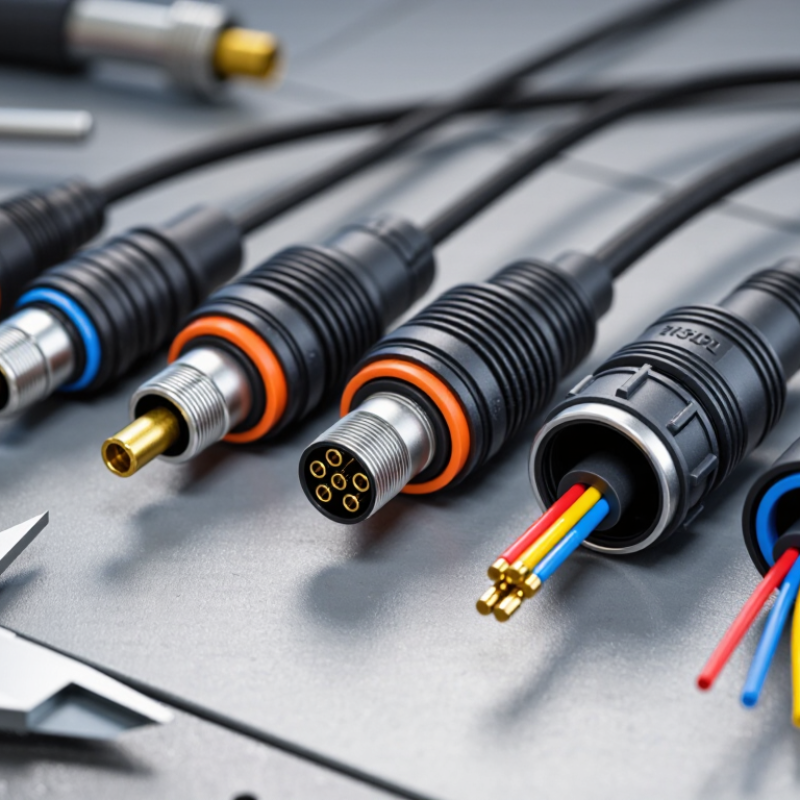
What Defines a Harness Connector for Global Buyers in 2026?
In 2026, a harness connector for global buyers is more than a plug that fits. It must match the wiring assembly electrically, mechanically, and environmentally. Buyers should check circuit count, current rating, wire gauge, terminal retention, and mating dimensions. Looks are not enough. A connector that seats easily on a bench may loosen under vibration or become difficult to service in a crowded enclosure.
Reliable selection depends on the actual operating conditions. Compare sealing performance, temperature range, material details, and resistance to vibration against the equipment’s needs. Ask for drawings, clear test records, and traceability for the connector and terminals. Small details matter. A slightly different cavity layout can cause assembly delays or costly rework. Do not assume that similar-looking parts are interchangeable; confirm fit with samples and the intended wires before approving a production order.
For international sourcing, clear documentation and consistent quality controls make evaluation easier. Request information on inspection methods, change notification, packaging, and expected lead times. Check that the supplier can support repeat orders, not just an attractive first sample. There is no universal best connector. The right choice balances performance, availability, serviceability, and total cost for the specific application. Some specifications may still need refinement after testing, and that is worth acknowledging early.
2026 Best Harness Connector for Global Buyers?
A connector’s IP water-protection rating can help buyers assess suitability for its intended environment. The chart summarizes IEC 60529 water-protection codes; the code numbers are classifications, not a linear performance score.
IPX ratings address water protection only. Confirm the complete connector system’s electrical, temperature, vibration, chemical, and installation requirements for the application. Source: IEC 60529.
How Do ISO 19642 and SAE J1128 Guide Automotive Wire Selection?
ISO 19642 and SAE J1128 help buyers compare automotive wire, but they serve different specification frameworks. The ISO 19642 series addresses road-vehicle cables, including construction, dimensions, and performance testing. SAE J1128 covers low-voltage automotive primary cable requirements. Neither standard alone confirms that a wire will fit a particular harness connector.
Check the exact cable type and standard edition listed in the vehicle or project specification. Then compare conductor size, insulation material, temperature rating, and resistance to abrasion or fluids against the installation conditions. A cable routed beside a warm engine component may need different insulation performance from one inside a protected cabin loom. Small details matter.
Connector fit matters too. Confirm the terminal’s approved wire-size range and the cable’s outside diameter; insulation that is too thick can prevent proper sealing. Ask suppliers for traceable test data, not just a standards claim on a datasheet. Real installations are messier. Routing, vibration, and assembly quality can still affect service life, so validate the complete wire-terminal-seal combination where possible. I would not treat either standard as a shortcut for checking the application’s own requirements.
2026 Best Harness Connector for Global Buyers? — How Do ISO 19642 and SAE J1128 Guide Automotive Wire Selection?
What Does IEC 60529 IP67 Require: 1 m Immersion for 30 Minutes?
2026 Best Harness Connector for Global Buyers?
What Does IEC 60529 IP67 Require: 1 m Immersion for 30 Minutes?
IEC 60529 defines IP67 as dust-tight protection plus temporary immersion protection. Its IPX7 test specifies immersion for 30 minutes. For enclosures under 850 mm tall, the lowest point sits 1,000 mm below the water surface; taller enclosures use a different positioning rule. These are test conditions, not a promise of permanent underwater operation. The reference is IEC 60529:1989+A1:1999+A2:2013, clause 14.2.7.
For a harness connector, the tested assembly matters. A connector may meet IP67 when mated, yet lose protection if a seal is missing, a cable is undersized, or installation leaves the backshell loose. Check the supplier’s test report for the exact connector configuration, cable diameter, and mating state. Ask whether the report covers the complete assembly, not just the connector body. Small details matter. A real installation can differ from a lab setup.
Tips: Confirm the specified mating condition and cable range before selecting a connector. Inspect seals after assembly, then test representative harnesses using the intended installation method. IP67 is not a pressure-wash rating. And 30 minutes is not forever.
Which Ratings, Materials, and Compliance Factors Matter When Comparing Suppliers?
2026 Best Harness Connector for Global Buyers?
Which Ratings, Materials, and Compliance Factors Matter When Comparing Suppliers?
A connector’s headline current rating is only a starting point. Ask for test conditions: wire size, ambient temperature, number of loaded circuits, and allowable temperature rise. Otherwise, two ratings may not be comparable. The IEA’s Global EV Outlook 2025 projected more than 20 million electric-car sales in 2025, over one-quarter of global car sales. That shift makes voltage, heat, vibration, and sealing performance important comparison points, even for buyers outside automotive markets. Numbers can mislead.
Match materials to the actual environment. Polyamide housings can suit demanding applications, but moisture and heat exposure still require validation; seal material and contact plating also affect durability. For water or dust exposure, check the exact IEC 60529 IP rating and test conditions. IP67, for example, includes dust protection and temporary immersion under specified conditions. Request full test reports, not just a logo or certificate. Compare them against IPC/WHMA-A-620 workmanship requirements and the relevant end-use standards. For vehicle programs, confirm applicable quality-system requirements and traceability for terminals, seals, and resin lots. A neat datasheet still leaves gaps. Ask suppliers for temperature-cycle, vibration, and mating-cycle evidence; then check whether the tested configuration matches the part being quoted. One detail is easy to miss: an impressive rating may apply only to a fully assembled connector, not an unmated one.